Drained peatlands causing huge phosporus releases from bottom of the seas
The Finnish Association for Sustainable Forestry has called upon the
Finnish government and the Baltic Marine Environment Protection
Commission – HELCOM to study the impact of forestry on the state of the
Baltic Sea and the inland waters of Finland. This request is based on an
assessment that tiny particles of suspended humus in the effluent from
drained peatland in Finland have caused oxygen depletion near the bottom
of the sea and inland watercourses, triggering the phenomenon known as
internal loading. This pollution phenomenon arises when the bottom
sediment of these waters releases the phosphorus that causes eutrophication.
More than five million hectares of peatland have been drained in
Finland, while large quantities of nutrients and humus have also been
discharged from over ten million hectares of clear-cutting and soil
cultivation sites.
The Finnish Association for Sustainable Forestry believes that these
actions devastate the natural water cycle and have a decisive impact on
the origins of eutrophication.
“It’s odd how forestry is overlooked when considering the gigantic flow
of humus and its consequenses” observes Association legal advisor Mikko
Vartiainen, criticising current methods of compiling statistical records
on discharges.
“This is an unfair practice when comparing the responsibility of various
activities for the state of the water system. There are plenty of lakes
that suffer regularly from algal blooms, even though there is no human
habitation or agriculture anywhere near them.”
The Finnish Association for Sustainable Forestry is also surprised at
the generally poor state of knowledge of humus discharges and their
effects.
“It seems that during the golden age of mire drainage it was not even
possible to make measurements during the most severe flooding so that we
would know the quantities of humus that were released at these times,”
explains Association information officer Hannu Hyvönen.
“We do know, however, that over the years following the first mire
drainage projects the rate of humus discharge increased to levels
corresponding to the natural leachate of several hundred years.”
In its communication to the Finnish government and HELCOM the Finnish
Association for Sustainable Forestry calls for the appointment of an
independent international research team to study the effects of forestry
operations on the state of the Baltic Sea.
“One reason for the lack of information and attention in this area is
that mire drainage is regarded as a heroic accomplishment in Finland,
and conditions have not been auspicious for researchers to go out and
study the negative impacts of this work,” arques prof. Erkki Lähde the
justification for insisting on an independent international study.
New mire drainage poses a threat to water system
While the Association believes that humus discharges from forestry will
cause sustained problems in the water system, the latest threat comes
from current projects to renovate existing mire drainage ditches. The
humus discharges from these projects will almost match the scale of the
original mire drainage.
“They say that special drainage arrangements could be used to stop
discharges to the water system, which would be a plausible argument if
it wasn’t for the flooding season. The huge mass of water flowing at
this time carries the greatest discharge volumes, and these discharges
will not be trapped in settling basins,” Hannu Hyvönen explains.
The communication from the Association calls for the suspension of
remedial drainage projects until studies of the effects of drainage have
been completed. The Association is also insisting on a moratorium on
clear-cutting and soil cultivation in areas where there is a high risk
of nutrient leaching.
Annexes:
1. Communication to the Baltic Marine Environment Protection Commission
– HELCOM
2. Article by Pekka Viherä on oxygen depletion and phosphorus loading
Video interview:
The video interview of Pekka Viherä and Mikko Vartiainen is available in
mp4
(The video is untill now only in Finnish. We hope to get english version soon in this address:
The footage with full resolution is available for broadcastings if needed.
More information on:
http://mehta.fi
8. November 2007


15. August 2007
Ostseerat: Prioritäten der lettischen Präsidentschaft
Seit dem 1.Juli 2007 übernahm Lettland für ein Jahr die Präsidentschaft im Ostseerat (Council of Baltic Sea States - CBSS). Dabei ist es üblich, dass jede Präsidentschaft inhaltliche Schwerpunkte festsetzt. Lettland hat bisher drei Hauptthemen für die anstehenden Aktivitäten genannt: Bildung & Ausbildung, Energie, und zivile Sicherheit.
Bildung und Weiterbildung
Hebung der Wettbewerbsfähigkeit der regionalen Ausbildungseinrichtungen auf europäisches und globales Niveau - so steht es auf der Agenda Lettlands. Die gegenseitige Anerkennung von bildungspolitischen Ergebnissen einzelner Länder soll dabei einer der zu erreichenden Punkte sein. Allerdings bleibt das lettische Thesenpapier an dieser Stelle noch sehr allgemein, was denn diese "Ergebnisse" (Errungenschaften) sein sollen.
Leichter verständlich scheint es da, wenn die elektronische Vernetzung der Universitäten eingefordert wird. Zusätzliches Geld hat eine Einrichtung wie der Ostseerat sowieso nicht zur Verfügung - leichter scheint es da, dort etwas zu fordern, wo die Finanzierungswege sowieso klar sind. Da werden "Innovations-Parks" für neue Ideen gefordert, Weiterbildung zum Thema nachhaltige Entwicklung bis hin zur sogenannten "nachhaltigem Konsum" - freundlich zur Umwelt, und anhaltend fördernd für die Kommerzialisierung aller Lebensbereiche?
Auch das Thema Erwachsenenbildung erscheint vielleicht einfacher, als es seine Positionierung auf der Prioritätenliste ahnen läßt: zu verschieden sind ja die Modelle von Bildung und Weiterbildung in den einzelnen Ostseeanrainerstaaten.
Auch Maßnahmen und Arbeitsmittel werden für diesen Bereich genannt, hier gibt es aber keine Überraschungen: Arbeitsgruppen von Expert/innen & Ministertreffen gibt es auch anderswo zu Genüge.
Energie
Hier versammeln sich vielleicht die heißesten Themen. Immerhin gilt das russisch-deutsche Projekt einer Gaspipeline durch die Ostsee nicht gerade als geeignet, sich neue Freunde an der Ostsee zu schaffen, und die Explosion der Energiepreise erzeugt in vielen Ländern großen Ärger. Zudem stellt gerade Lettland mit Andris Piebalgs in der Europäischen Kommission den Kommissar für Energiefragen. Aus den baltischen Staaten war in der jüngsten Vergangenheit vermehrt der Ruf nach einer Koordinierung der EU-Energiepolitik zu vermehmen, und vielleicht meinte man so eine breitere Zustimmung zum teuren und nicht unumstrittenen Vorhaben des Baues eines neuen Atomkraftwerks zu bekommen.
Die Ostseerats-Präsidentschaft gibt sich aber gerade in Energiefragen auffällig zurückhaltend. Ist hier die "Realität des Machbaren" zu spüren? Die Infrastruktur zur Engergieversorgung will man stärken, Erfahrungen bei der Förderung von erneuerbarer Energie austauschen, und eine einheitliche Position der Ostseestaaten in rechtlichen Fragen will man erreichen. Das war's.
Zivile Sicherheit
Dieser Bereich, der Englisch "Civil Security" heißt und Deutsch immer etwas unbeholfen daherkommt, meint eigentlich die Bereiche Menschenrechte, soziale Sicherheit und nachhaltige Entwicklung. Einerseits könnte es als Absicherung des Wohlstands und der Wirtschaft bezeichnet werden, andererseits sind eben wichtige Bürgerrechte gemeint. Hier existieren im Bereich des Ostseerats die meisten Arbeitsgruppen: eine Expertengruppe zur maritimen Sicherheit, eine Task Force gegen Menschenhandel und eine weitere gegen organisierte Kriminalität, eine Arbeitsgruppe zum Schutz der Rechte von Kindern, eine weitere zu sogenannten "demokratischen Institutionen", ein jährliches Treffen von Staatsanwälten und eines von Abteilungsleitern zum Thema Zivile Sicherheit, eine Arbeitsgruppe zu nuklearer Sicherheit und Strahlenschutz, und die Baltic 21 zur Diskussion von Maßnahmen zur nachhaltigen Entwicklung.
Was kann da in den nächsten Monaten konkret erreicht werden, außer das alle diese Kommissionen weiter arbeiten? Das, was Lettland an Prioritäten formuliert, klingt zunächst mal einfach nach "mehr Kooperation wagen". Im übrigen soll die Schiffssicherheit weiter verbessert und die Korruption stärker bekämpft werden.
Erwartungen
Jährlich trifft sich der Ostseerat zum sogenannten "Ostseegipfel". Doch wer interessiert sich für die Ergebnisse, wer beobachtet die Aktivitäten, wer fordert Effektivität der beschlossenen Maßnahmen ein? 2007 fiel das Ereignis mitten in den Hype um den globalen Weltgipfel in Heiligendamm.
Die meisten Ostseeanrainer - bis auf Norwegen und Rußland - konzentrieren sind inzwischen auf ihre erweiterten Möglichkeiten als Mitglieder der Europäischen Union. Da wird die Ostseekooperation - obwohl direkt vor der Haustür gelegen - psychologisch schon mal zum Randmeer.
Auch Deutschland entwickelt kein starkes Interesse an der Ostseeregion: nicht einmal die norddeutschen Bundesländer vermögen das in Berlin zu erreichen, eine Koordination in Ostseefragen gibt es nicht. Zwar dürfen Politikerinnen und Politiker einmal pro Jahr zum "Rat der Ostseeparlamentarier" fahren (auch mehr so eine "Kennenlern-Veranstaltung", als ein Instrument zur Umsetzung innovativer Ideen). Dieses Jahr Ende August findet dieses Ereignis mit dem Kürzel BSPC gar im hauptstädtischen Berlin statt - mal sehen, wieviele deutsche Medien es überhaupt bemerken. Anläßlich der lettischen Ostseeratspräsidentschaft haben sich eine ganze Reihe lettischer Gäste in Berlin angesagt. Deutsche Ziele für die Ostseekooperation: Fehlanzeige.
Schlußfolgerung: Ostseekooperation ist ..... wenn sie stattfindet. Der deutschen Politik scheint es zu genügen, wenn zwei bis drei wissenschaftliche Institute still und leise die Szene beobachten (Berlin, Kiel, Greifswald). Dabei könnte doch die regionale Nähe zum Beispiel dazu genutzt werden, Menschen, Kulturen, Traditionen und Lebensarten mehr miteinander bekannt zu machen! Doch solch ein Ansinnen scheint nach der EU-Erweiterung von 2004 wie weggeblasen: regierten noch bis dahin die Vorurteile und Vorbehalte, so tuen die EU-Mitglieder in Ost und West inzwischen so, als ob man sich bereits jahrzehntelang kennen würde. Amtsträger mit gleichen Rechten, junge aufstrebende Ökonomen mit gleichen Marktchancen = Ziel erreicht?
Ich meine, Ostseekooperation könnte mehr sein als die Selbstgefälligkeit gut verdienender Wirtschaftskonzerne und mittelmäßiger Politiker/innen. Die Zivilgesellschaft fördern, dass hieße Bürgersinn entwicklen, Menschen Aktivitäten anbieten, kulturelle Events mit Teilnahmechance für alle bieten, Gleichgesinnte zusammenbringen. Auch hier gilt es zu "investieren": die Menschen mit ihrem Engagement und ihrer Ungeduld, die Verantwortlichen mit Umsicht und Sensibilität für unterschiedliche Interessenlagen. Lettische Präsidentschaft im Ostseerat: hoffen wir auf neue Ideen!
Lettische Ostseeratspräsidentschaft: Kalender der Aktivitäten und Termine (lettisch)
Prioritäten der lettischen Ostseeratspräsidentschaft (englisch)
Der Ostseerat (Council of Baltic Sea States - engl.)
Kalender der Aktivitäten rund um den Ostseerat (engl.)
Ostseekooperation der Nichtregierungsorganisationen
Portal "Baltic Sea Region" (engl.)
Der Deutsche Bundestag zur Konferenz der Ostseeparlamentarier 27/28.August 2007 in Berlin
Bildung und Weiterbildung
Hebung der Wettbewerbsfähigkeit der regionalen Ausbildungseinrichtungen auf europäisches und globales Niveau - so steht es auf der Agenda Lettlands.
 Die gegenseitige Anerkennung von bildungspolitischen Ergebnissen einzelner Länder soll dabei einer der zu erreichenden Punkte sein. Allerdings bleibt das lettische Thesenpapier an dieser Stelle noch sehr allgemein, was denn diese "Ergebnisse" (Errungenschaften) sein sollen.
Leichter verständlich scheint es da, wenn die elektronische Vernetzung der Universitäten eingefordert wird. Zusätzliches Geld hat eine Einrichtung wie der Ostseerat sowieso nicht zur Verfügung - leichter scheint es da, dort etwas zu fordern, wo die Finanzierungswege sowieso klar sind. Da werden "Innovations-Parks" für neue Ideen gefordert, Weiterbildung zum Thema nachhaltige Entwicklung bis hin zur sogenannten "nachhaltigem Konsum" - freundlich zur Umwelt, und anhaltend fördernd für die Kommerzialisierung aller Lebensbereiche?
Auch das Thema Erwachsenenbildung erscheint vielleicht einfacher, als es seine Positionierung auf der Prioritätenliste ahnen läßt: zu verschieden sind ja die Modelle von Bildung und Weiterbildung in den einzelnen Ostseeanrainerstaaten.
Auch Maßnahmen und Arbeitsmittel werden für diesen Bereich genannt, hier gibt es aber keine Überraschungen: Arbeitsgruppen von Expert/innen & Ministertreffen gibt es auch anderswo zu Genüge.
Energie
Hier versammeln sich vielleicht die heißesten Themen. Immerhin gilt das russisch-deutsche Projekt einer Gaspipeline durch die Ostsee nicht gerade als geeignet, sich neue Freunde an der Ostsee zu schaffen, und die Explosion der Energiepreise erzeugt in vielen Ländern großen Ärger. Zudem stellt gerade Lettland mit Andris Piebalgs in der Europäischen Kommission den Kommissar für Energiefragen. Aus den baltischen Staaten war in der jüngsten Vergangenheit vermehrt der Ruf nach einer Koordinierung der EU-Energiepolitik zu vermehmen, und vielleicht meinte man so eine breitere Zustimmung zum teuren und nicht unumstrittenen Vorhaben des Baues eines neuen Atomkraftwerks zu bekommen.
Die Ostseerats-Präsidentschaft gibt sich aber gerade in Energiefragen auffällig zurückhaltend. Ist hier die "Realität des Machbaren" zu spüren? Die Infrastruktur zur Engergieversorgung will man stärken, Erfahrungen bei der Förderung von erneuerbarer Energie austauschen, und eine einheitliche Position der Ostseestaaten in rechtlichen Fragen will man erreichen. Das war's.
Zivile Sicherheit

Dieser Bereich, der Englisch "Civil Security" heißt und Deutsch immer etwas unbeholfen daherkommt, meint eigentlich die Bereiche Menschenrechte, soziale Sicherheit und nachhaltige Entwicklung. Einerseits könnte es als Absicherung des Wohlstands und der Wirtschaft bezeichnet werden, andererseits sind eben wichtige Bürgerrechte gemeint. Hier existieren im Bereich des Ostseerats die meisten Arbeitsgruppen: eine Expertengruppe zur maritimen Sicherheit, eine Task Force gegen Menschenhandel und eine weitere gegen organisierte Kriminalität, eine Arbeitsgruppe zum Schutz der Rechte von Kindern, eine weitere zu sogenannten "demokratischen Institutionen", ein jährliches Treffen von Staatsanwälten und eines von Abteilungsleitern zum Thema Zivile Sicherheit, eine Arbeitsgruppe zu nuklearer Sicherheit und Strahlenschutz, und die Baltic 21 zur Diskussion von Maßnahmen zur nachhaltigen Entwicklung.
Was kann da in den nächsten Monaten konkret erreicht werden, außer das alle diese Kommissionen weiter arbeiten? Das, was Lettland an Prioritäten formuliert, klingt zunächst mal einfach nach "mehr Kooperation wagen". Im übrigen soll die Schiffssicherheit weiter verbessert und die Korruption stärker bekämpft werden.
Erwartungen
Jährlich trifft sich der Ostseerat zum sogenannten "Ostseegipfel". Doch wer interessiert sich für die Ergebnisse, wer beobachtet die Aktivitäten, wer fordert Effektivität der beschlossenen Maßnahmen ein? 2007 fiel das Ereignis mitten in den Hype um den globalen Weltgipfel in Heiligendamm.
Die meisten Ostseeanrainer - bis auf Norwegen und Rußland - konzentrieren sind inzwischen auf ihre erweiterten Möglichkeiten als Mitglieder der Europäischen Union. Da wird die Ostseekooperation - obwohl direkt vor der Haustür gelegen - psychologisch schon mal zum Randmeer.
Auch Deutschland entwickelt kein starkes Interesse an der Ostseeregion: nicht einmal die norddeutschen Bundesländer vermögen das in Berlin zu erreichen, eine Koordination in Ostseefragen gibt es nicht. Zwar dürfen Politikerinnen und Politiker einmal pro Jahr zum "Rat der Ostseeparlamentarier" fahren (auch mehr so eine "Kennenlern-Veranstaltung", als ein Instrument zur Umsetzung innovativer Ideen). Dieses Jahr Ende August findet dieses Ereignis mit dem Kürzel BSPC gar im hauptstädtischen Berlin statt - mal sehen, wieviele deutsche Medien es überhaupt bemerken. Anläßlich der lettischen Ostseeratspräsidentschaft haben sich eine ganze Reihe lettischer Gäste in Berlin angesagt. Deutsche Ziele für die Ostseekooperation: Fehlanzeige.
Schlußfolgerung: Ostseekooperation ist ..... wenn sie stattfindet. Der deutschen Politik scheint es zu genügen, wenn zwei bis drei wissenschaftliche Institute still und leise die Szene beobachten (Berlin, Kiel, Greifswald). Dabei könnte doch die regionale Nähe zum Beispiel dazu genutzt werden, Menschen, Kulturen, Traditionen und Lebensarten mehr miteinander bekannt zu machen! Doch solch ein Ansinnen scheint nach der EU-Erweiterung von 2004 wie weggeblasen: regierten noch bis dahin die Vorurteile und Vorbehalte, so tuen die EU-Mitglieder in Ost und West inzwischen so, als ob man sich bereits jahrzehntelang kennen würde. Amtsträger mit gleichen Rechten, junge aufstrebende Ökonomen mit gleichen Marktchancen = Ziel erreicht?
Ich meine, Ostseekooperation könnte mehr sein als die Selbstgefälligkeit gut verdienender Wirtschaftskonzerne und mittelmäßiger Politiker/innen. Die Zivilgesellschaft fördern, dass hieße Bürgersinn entwicklen, Menschen Aktivitäten anbieten, kulturelle Events mit Teilnahmechance für alle bieten, Gleichgesinnte zusammenbringen. Auch hier gilt es zu "investieren": die Menschen mit ihrem Engagement und ihrer Ungeduld, die Verantwortlichen mit Umsicht und Sensibilität für unterschiedliche Interessenlagen. Lettische Präsidentschaft im Ostseerat: hoffen wir auf neue Ideen!
Lettische Ostseeratspräsidentschaft: Kalender der Aktivitäten und Termine (lettisch)
Prioritäten der lettischen Ostseeratspräsidentschaft (englisch)
Der Ostseerat (Council of Baltic Sea States - engl.)
Kalender der Aktivitäten rund um den Ostseerat (engl.)
Ostseekooperation der Nichtregierungsorganisationen
Portal "Baltic Sea Region" (engl.)
Der Deutsche Bundestag zur Konferenz der Ostseeparlamentarier 27/28.August 2007 in Berlin
23. Juli 2007
Lettland startet Ostseerats-Präsidentschaft mit Fotowettbewerb
 Am 1.Juli 2007 übernahm Lettland die Präsidentschaft im Rat der Ostseeanrainerstaaten (auch "Ostseerat" genannt). Turnusmäßig wechselt die Präsidentschaft jedes Jahr.
Koordiniert werden Aktivitäten des Ostseerats in den jeweiligen Außenministerien.
Lettland ruft junge Fotografen und Fotografinnen, die zwischen 18 und 30 Jahren alt sind, zu einem Fotowettbewerb auf. "Where the Baltic Sea and People Meet" - wo sich die Ostsee und die Menschen treffen, so könnte es wohl übersetzt werden. Die besten Fotografien sollen im nächsten Frühjahr Teil einer Wanderausstellung werden, die in allen elf Hauptstädten der Ostseeanrainerstaaten gezeigt werden soll. Das Projekt wird zusammen mit dem lettischen Zentrum für moderne Kunst durchgeführt. Die lettischen Initiatoren erhoffen sich dadurch eine Förderung des Gedankens der "Balticness"
Jede Bewerberin / jeder Bewerber kann bis zu 5 Fotografien einsenden. Einsendeschluß ist der 5.September 2007.
Koordination und weitere Informationen: Lettisches Außenministerium, Elīna Hermansone / Elīna Lazareva, Telefon +371 29140968, E-mail: photo@mfa.gov.lv.
Addresse: The Latvian Center for Contemporary Art, Alberta Str.13, Riga, LV – 1010, Lettland.
Lettische Infoseite zum Fotowettbewerb (engl.)
Teilnahmeregeln (PDF-Datei, engl.)
26. Januar 2007
Baltic Environmentalists comment Gas Pipeline Project
Coalition Clean Baltic - the Network of the Baltic Sea Regions Environmental NGOs, published its comments on the Gas Pipeline Project today.
Here is the text of the press release, to be requested also from: Coalition Clean Baltic, Östra ?gatan 53, SE-753 22 UPPSALA, Sweden. Phone +46 18 71 11 70 Fax +46 18 71 11 75
E-mail: gunnar.noren@ccb.se, www.ccb.se.
 CCB comments and request for studies to be included in the Environmental Impact Assessment for the planned
North European Gas Pipeline in the Baltic Sea,
under the Espoo Convention.
CCB has the following comments:
Environmental effects of the project
The initial environmental impact will be during construction. As the sea floor is not flat work will be needed to make a “road” for the pipeline. The environmental impact depends largely on how much dredging, blasting and removing of rocks that will have to be done. The big difference between really soft bottoms quickly changing to rocky bottoms will be demanding for the construction. Another physical problem might be the quick pulses of stronger currents on the bottom and the ice cover during winter for the beginning and ending of the pipe and the service station.
In the Gulf of Finland there are a lot of hazardous chemicals buried in the sediment (also in other parts of the Baltic Sea), specially cadmium, mercury, led, TBT and DDT. Very high concentrations and corresponding amounts in the sediments can be foreseen. According to the EIA program by Nord-Stream, the concentrations of heavy metals in the Gulf of Finland are very high according to Swedish standards (from considerable pollution (class 3 of 5) to very contaminated (class 5 of 5)). Therefore the option of removing contaminated sediments to the surface and handling/cleaning it on land should be included in the EIA.
Nord Stream mentioned the risk of dumped ammunitions to be found while constructing the pipeline. In different sources it is documented that ammunitions have been dumped before reaching the dump sites or accidentally distributed through fisheries activities. The available information on the exact position and amount of all dumped ammunitions is incomplete. Hence, CCB expects dumped ammunitions not only on registered dump sites but more or less all along the planned route of the pipeline.
The danger occurring from these old weapons is manifold: When they are intact they can explode by accident and release different toxic substances apart from the noise. When they are corroded and/or broken these toxic substance can be mobilised through the pipeline construction.
In case of explosions of ammunitions (accidentally or indented) there is a harmful influence on marine mammals and fish to be expected. In a circle of several kilometres radius around the detonation serious injuries of gas filled organs of animals are likely to occur.
The nutrient content in the sediments is also very high, and an estimation should be made of the amount that could be released during construction is needed. The impact on Baltic eutrophication can be adverse, and can indicate a final regime shift for the Baltic.
Note that several of governmental long term environmental monitoring stations will end up being under the pipeline. One should ensure that these can still operate and provide their data.
Underwater noise can also be a problem for the marine life, such as fish species and marine mammals, close to a gas pipeline when the pipeline is in use. The Environmental Imapct Assessment (EIA) must include a description of what kind of noise, incl frequences of the sounds and sound levels that can arise from the gas pipeline and the extent of disturbances during construction.
It is essential that the project parties are aware that the planned location of the gas pipeline will have on impact on Natura 2000 areas, such as the Hoburg bank area. All possible conflicts with sites designated for Natura 2000 network should be a subject of separate assessment to fulfil requirements of Article 6(3) and 6(4) of the Habitats Directive, which is not the case now.
The entire Gulf of Finland must be regarded as a gas pipeline environmental impact area, and not only the strip of two kilometers along the pipeline itself.
CCB request:
1. To monitor the content of hazardous substances and nutrients in the sediment in each spot where dredging is planned or needed, and estimate costs for removing of the dredged sediments up on land and handle it as hazardous waste, if the concentrations of contaminants are above permitted levels.
2. A detailed estimation of how much nitrogen and phosphourous, in different Baltic Sea sub-basins, that can be released when contructing the gas pipeline.
3. All research work and analyses on dumped ammunitions have to be applied for the total length of the planned pipeline.
4. The EIA has to describe, analyse and evaluate the effects of: - Remobilisation and release of potential harmful substances from dumped ammunitions caused directly or indirectly by the pipeline construction - Blow up and accidentally explosion of dumped ammunitions - Pushing aside of found ammunitions - Salvage of found ammunitions - Re-dumping of found ammunitions (as far as foreseen)
5. A detailed safety and ammunition handling concept will have to be presented prior to the EIA. It should contain detection, going around (where ever possible), removal, handling and mitigation measures for explosions in the sea. For any activities Best Available Technologies (BAT) have to be employed. The guiding principle has be the minimisation of harmful effects for human beings and the environment.
6. The risks for marine mammals and fishes through detonations of dumped ammunitions have to be analysed and measurements to minimise the injuries (e.g. gas bubble curtains) have to be discussed. Nord Stream has to present a convincing security concept how they want to protect the marine environment against the harmful effects of possible explosions.
7. To study what environmental monitoring stations in the Baltic Sea that will be influenced by the planned location of the gas pipeline, and estimation of costs for moving the gas pipline outside the area of importance for long-term monitoring.
8. A description of what kind of noise, incl frequences of the sounds and sound levels that can arise from the gas pipeline, e g submarine sounds, and its impact on the Baltic Sea fauna.
9. A study that describes the impact of the gas pipeline (construction phase and operating phase) on the very vulnerable Ringed Seal population in the Russian Gulf of Finland (Vyborg Bay), and northern Gulf of Finland shores and archipelago area in Finland, and what actions can be taken to mitigate such impact.
10. To propose alternative locations of the pipeline accordingly to the Article 6 of Habitats Directive and relevant procedures, to ensure that Natura 2000 areas, e.g. Hoburgs bank in Swedish waters, will be safeguarded.
11. Description of the fish stocks and fisheries interests around the pipeline area, and evaluation of the impact of the pipeline construction and operation on fish stocks and fisheries interests.
12. To establish a liability fund with regard to the prevention and remedying of environmental damage which may occur during the construction, exploitation and decommissioning phase of the project.
13. Many islands in the Russian Gulf of Finland are very important nature sites and are intended to be included into the planned nature reserve “Ingermanlandskiy”. It is important to make sure that the area of these islands is not used for construction activities (e.g. as storage sites etc). The EIA should contain information that will guarantee the safeguarding of Russian islands in the Gulf of Finland.
14. To restrict Gas Pipeline construction activities in spring-summer fish spawning period in coastal areas in Russia and Germany (e.g. 15 April – 15 June according to fish protection legislation in Russia).
15. “Gazprom” company as the project leader, according to Russian environmental legislation, should organize public hearings in Russia as a part of the EIA and provide the results of the public hearing for state environmental expertise process.
Other options should be considered
In the EIA programme only two options are considered, the zero option of no pipeline and the option of building according to plans in the programme. There should be included other options as well, both on land (e g parallel with existing lines) and on the sea floor.
Environmental impact on the Baltic Sea ecosystem of the planned gas pipeline, in Russian waters, outside Russian land territories, around the Vyborg Bay
The gas pipeline will enter the Baltic Sea close to river Serga, west of the Vyborg Bay. The following fish species are in these waters (see e g Nature Conservation Atlas of the Russian Part of the Gulf of Finland, published by Baltic Fund for Nature St Petersburg, www.bfn.org.ru). - Sea-trout (Red Book species in Russia). There are areas with high concentration of young sea-trout at the delta and outside river Ser’ga, in border waters between Russia-Finland and in the delta and outside river Virojki (in Finland) - River lamprey - sites with high concentration of migrating individuals, e g in the delta and outside Ser’ga River - Anadrom vendace - in Gulf of Finland waters - Twaite shad - along the northern coast of Gulf of Finland
Some bird species also have important areas in this region (e.g. Whooper swan, Caspian tern, Barnacle goose) These require special attention, and must be studied in the EIA.
The impact on natural values in Russian RAMSAR areas in the Gulf of Finland must be considered and described, and actions to mitigate such impacts should be suggested.
* The impact of the construction and operation of the gas pipeline on above-mentioned fish species must be described in details, and proposals for actions to avoid any impact on these species, must be suggested. * The impact on smelt catches (one of the most important commercial fish species in the Gulf of Finland) in the waters where the gas-pipeline will be situated and adjacent Russian and Finnish waters must be considered carefully.
Environmental impact on the Baltic Sea ecosystem of the planned gas pipeline on Russian land territories around the Vyborg Bay and Leningrad oblast
The pipeline is planned to enter the Baltic Sea in Portovaya Bay and will accordingly cross 7 rivers coming from Nort-West via Finland to the Vyborg Bay. In these river ecosystems we find Baltic Sea ecosystem species, using the river ecosystem for a part of its lifecycle, for spawning and breeding, and living the rest of its life-cycle in the Baltic Sea waters. Such species are e g Baltic salmon, Baltic sea-trout, Baltic whitefish (Coregonus) and river Lamprey (Lampetra).
The impact from the land construction of the pipeline on Russian land territories are most relevant to bring up and handle within the Espoo convention case, because such land construction can have adverse impact on Baltic Sea marine species and ecosystem.
* The EIA shall describe the location of the gas pipeline on Russian land territories from St Petersburg region to Portovaya Bay on detailed maps, and also describe the crossing of rivers to the Baltic Sea, possible changes of the river beds, and proposals for actions to avoid any impact on Baltic Sea river migrating species in such rivers. Of special interest are the rivers on the Northern shores of the Russian Gulf of Finland, which have documented natural values, and the upper tributaries of the Luga river, the most important wild Baltic salmon river in Baltic Russia, South and South-West of St Petersburg where the gas pipeline may cross the Luga river system.
Monitoring of environmental impacts
In the presented EIA programme there is no plan for continuid monitoring of the environmental impacts of the pipe line after construction. Neither is it mentioned how the effects and impacts of the construction phase will be monitored. Such details must be presented, with a chance for other stakeholders to comment and influence the final decisions of monitoring and contingency procedures.
The use of expertise
The project is very extensive and the best expertise from different areas is needed. In the EIA programme is it not mentioned who will be the experts and how the studies will be executed. Such info must be provided and stakeholders must be given chance to influence the selection of best expertise.
Public Access of information about the project
The information and data already collected on the Baltic Sea bottom structures, sediment contamination etc, by Nord Stream must be accessible for the general public. Nord Stream data connected to the environmental impact of the project must be made publicly available. Maybe it could ease our concerns?
“Gazprom” company as the Russian project leader, according to Russian environmental legislation, should organize public hearings in Russia as a part of the EIA and provide the results of the public hearing for state environmental expertise process.
In case of accidents
The assessment of effects in case of an accident, for example a rupture of the pipe, should be included in the EIA. An evaluation should be made staing the devision of responsibility – in potential accident scenarios. What is the responsibility of the governments, the construction contractor and the operators and who will make the actual decisions on clean-up initiatives and in the handling of emergency situations. The prevention and remedying of environmental damage should be paid by the consortium through an established liability fund.
Removal of the gas pipeline after its life-span of 30-50 years
All constructions in the Baltic Sea Region in waters and on land shall always be removed after its life-span.
* The EIA shall include a presentation of the costs for removal of the construction after 30-50 years, and how a reserve fund, with a “removal fee” included in the gas tariff system, must be constructed under the operation period to guarantee a future removal and restoration of the area.
The timetable The timetable for the EIA is far too tight. We are concerned that there will not be enough time to discuss the quality assurance for all the necessary studies enabling a professionally produced EIA.
On-going process for stakeholder influence of the EIA
As many important facts and information on the details of how the EIA study will be performed are still not presented, an on-going consultation process with the Parties of origin within the Espoo convention and with other stakeholders interested in the EIA study, should be organised. One way could be to provide detailed info on the Nord Stream website regularily, and by organising regular meetings with all interested partners during 2007.
Environmental liability
Environmental liability of the project is very unclear now. EU rules on environmental liability with regard to the prevention and remedying of environmental damage (Directive 2004/35/CE) are not directly applicable for the project. However, the EU Member States (parties) in accordance to art. 14 of aformentioned directive can introduce a financial security intruments. Therefore, we believes all potentially project affected parties have right to demand a project liability fund.
On behalf of CCB
Gunnar Norén
Executive secretary
Here is the text of the press release, to be requested also from: Coalition Clean Baltic, Östra ?gatan 53, SE-753 22 UPPSALA, Sweden. Phone +46 18 71 11 70 Fax +46 18 71 11 75
E-mail: gunnar.noren@ccb.se, www.ccb.se.
 CCB comments and request for studies to be included in the Environmental Impact Assessment for the planned
 North European Gas Pipeline in the Baltic Sea,
under the Espoo Convention.
CCB has the following comments:
Environmental effects of the project
The initial environmental impact will be during construction. As the sea floor is not flat work will be needed to make a “road” for the pipeline. The environmental impact depends largely on how much dredging, blasting and removing of rocks that will have to be done. The big difference between really soft bottoms quickly changing to rocky bottoms will be demanding for the construction. Another physical problem might be the quick pulses of stronger currents on the bottom and the ice cover during winter for the beginning and ending of the pipe and the service station.
In the Gulf of Finland there are a lot of hazardous chemicals buried in the sediment (also in other parts of the Baltic Sea), specially cadmium, mercury, led, TBT and DDT. Very high concentrations and corresponding amounts in the sediments can be foreseen. According to the EIA program by Nord-Stream, the concentrations of heavy metals in the Gulf of Finland are very high according to Swedish standards (from considerable pollution (class 3 of 5) to very contaminated (class 5 of 5)). Therefore the option of removing contaminated sediments to the surface and handling/cleaning it on land should be included in the EIA.
Nord Stream mentioned the risk of dumped ammunitions to be found while constructing the pipeline. In different sources it is documented that ammunitions have been dumped before reaching the dump sites or accidentally distributed through fisheries activities. The available information on the exact position and amount of all dumped ammunitions is incomplete. Hence, CCB expects dumped ammunitions not only on registered dump sites but more or less all along the planned route of the pipeline.
The danger occurring from these old weapons is manifold: When they are intact they can explode by accident and release different toxic substances apart from the noise. When they are corroded and/or broken these toxic substance can be mobilised through the pipeline construction.
In case of explosions of ammunitions (accidentally or indented) there is a harmful influence on marine mammals and fish to be expected. In a circle of several kilometres radius around the detonation serious injuries of gas filled organs of animals are likely to occur.
The nutrient content in the sediments is also very high, and an estimation should be made of the amount that could be released during construction is needed. The impact on Baltic eutrophication can be adverse, and can indicate a final regime shift for the Baltic.
Note that several of governmental long term environmental monitoring stations will end up being under the pipeline. One should ensure that these can still operate and provide their data.
Underwater noise can also be a problem for the marine life, such as fish species and marine mammals, close to a gas pipeline when the pipeline is in use. The Environmental Imapct Assessment (EIA) must include a description of what kind of noise, incl frequences of the sounds and sound levels that can arise from the gas pipeline and the extent of disturbances during construction.
It is essential that the project parties are aware that the planned location of the gas pipeline will have on impact on Natura 2000 areas, such as the Hoburg bank area. All possible conflicts with sites designated for Natura 2000 network should be a subject of separate assessment to fulfil requirements of Article 6(3) and 6(4) of the Habitats Directive, which is not the case now.
The entire Gulf of Finland must be regarded as a gas pipeline environmental impact area, and not only the strip of two kilometers along the pipeline itself.
CCB request:
1. To monitor the content of hazardous substances and nutrients in the sediment in each spot where dredging is planned or needed, and estimate costs for removing of the dredged sediments up on land and handle it as hazardous waste, if the concentrations of contaminants are above permitted levels.
2. A detailed estimation of how much nitrogen and phosphourous, in different Baltic Sea sub-basins, that can be released when contructing the gas pipeline.
3. All research work and analyses on dumped ammunitions have to be applied for the total length of the planned pipeline.
4. The EIA has to describe, analyse and evaluate the effects of: - Remobilisation and release of potential harmful substances from dumped ammunitions caused directly or indirectly by the pipeline construction - Blow up and accidentally explosion of dumped ammunitions - Pushing aside of found ammunitions - Salvage of found ammunitions - Re-dumping of found ammunitions (as far as foreseen)
5. A detailed safety and ammunition handling concept will have to be presented prior to the EIA. It should contain detection, going around (where ever possible), removal, handling and mitigation measures for explosions in the sea. For any activities Best Available Technologies (BAT) have to be employed. The guiding principle has be the minimisation of harmful effects for human beings and the environment.
6. The risks for marine mammals and fishes through detonations of dumped ammunitions have to be analysed and measurements to minimise the injuries (e.g. gas bubble curtains) have to be discussed. Nord Stream has to present a convincing security concept how they want to protect the marine environment against the harmful effects of possible explosions.
7. To study what environmental monitoring stations in the Baltic Sea that will be influenced by the planned location of the gas pipeline, and estimation of costs for moving the gas pipline outside the area of importance for long-term monitoring.
8. A description of what kind of noise, incl frequences of the sounds and sound levels that can arise from the gas pipeline, e g submarine sounds, and its impact on the Baltic Sea fauna.
9. A study that describes the impact of the gas pipeline (construction phase and operating phase) on the very vulnerable Ringed Seal population in the Russian Gulf of Finland (Vyborg Bay), and northern Gulf of Finland shores and archipelago area in Finland, and what actions can be taken to mitigate such impact.
10. To propose alternative locations of the pipeline accordingly to the Article 6 of Habitats Directive and relevant procedures, to ensure that Natura 2000 areas, e.g. Hoburgs bank in Swedish waters, will be safeguarded.
11. Description of the fish stocks and fisheries interests around the pipeline area, and evaluation of the impact of the pipeline construction and operation on fish stocks and fisheries interests.
12. To establish a liability fund with regard to the prevention and remedying of environmental damage which may occur during the construction, exploitation and decommissioning phase of the project.
13. Many islands in the Russian Gulf of Finland are very important nature sites and are intended to be included into the planned nature reserve “Ingermanlandskiy”. It is important to make sure that the area of these islands is not used for construction activities (e.g. as storage sites etc). The EIA should contain information that will guarantee the safeguarding of Russian islands in the Gulf of Finland.
14. To restrict Gas Pipeline construction activities in spring-summer fish spawning period in coastal areas in Russia and Germany (e.g. 15 April – 15 June according to fish protection legislation in Russia).
15. “Gazprom” company as the project leader, according to Russian environmental legislation, should organize public hearings in Russia as a part of the EIA and provide the results of the public hearing for state environmental expertise process.
Other options should be considered
In the EIA programme only two options are considered, the zero option of no pipeline and the option of building according to plans in the programme. There should be included other options as well, both on land (e g parallel with existing lines) and on the sea floor.
Environmental impact on the Baltic Sea ecosystem of the planned gas pipeline, in Russian waters, outside Russian land territories, around the Vyborg Bay
The gas pipeline will enter the Baltic Sea close to river Serga, west of the Vyborg Bay. The following fish species are in these waters (see e g Nature Conservation Atlas of the Russian Part of the Gulf of Finland, published by Baltic Fund for Nature St Petersburg, www.bfn.org.ru). - Sea-trout (Red Book species in Russia). There are areas with high concentration of young sea-trout at the delta and outside river Ser’ga, in border waters between Russia-Finland and in the delta and outside river Virojki (in Finland) - River lamprey - sites with high concentration of migrating individuals, e g in the delta and outside Ser’ga River - Anadrom vendace - in Gulf of Finland waters - Twaite shad - along the northern coast of Gulf of Finland
Some bird species also have important areas in this region (e.g. Whooper swan, Caspian tern, Barnacle goose) These require special attention, and must be studied in the EIA.
The impact on natural values in Russian RAMSAR areas in the Gulf of Finland must be considered and described, and actions to mitigate such impacts should be suggested.
* The impact of the construction and operation of the gas pipeline on above-mentioned fish species must be described in details, and proposals for actions to avoid any impact on these species, must be suggested. * The impact on smelt catches (one of the most important commercial fish species in the Gulf of Finland) in the waters where the gas-pipeline will be situated and adjacent Russian and Finnish waters must be considered carefully.
Environmental impact on the Baltic Sea ecosystem of the planned gas pipeline on Russian land territories around the Vyborg Bay and Leningrad oblast
The pipeline is planned to enter the Baltic Sea in Portovaya Bay and will accordingly cross 7 rivers coming from Nort-West via Finland to the Vyborg Bay. In these river ecosystems we find Baltic Sea ecosystem species, using the river ecosystem for a part of its lifecycle, for spawning and breeding, and living the rest of its life-cycle in the Baltic Sea waters. Such species are e g Baltic salmon, Baltic sea-trout, Baltic whitefish (Coregonus) and river Lamprey (Lampetra).
The impact from the land construction of the pipeline on Russian land territories are most relevant to bring up and handle within the Espoo convention case, because such land construction can have adverse impact on Baltic Sea marine species and ecosystem.
* The EIA shall describe the location of the gas pipeline on Russian land territories from St Petersburg region to Portovaya Bay on detailed maps, and also describe the crossing of rivers to the Baltic Sea, possible changes of the river beds, and proposals for actions to avoid any impact on Baltic Sea river migrating species in such rivers. Of special interest are the rivers on the Northern shores of the Russian Gulf of Finland, which have documented natural values, and the upper tributaries of the Luga river, the most important wild Baltic salmon river in Baltic Russia, South and South-West of St Petersburg where the gas pipeline may cross the Luga river system.
Monitoring of environmental impacts
In the presented EIA programme there is no plan for continuid monitoring of the environmental impacts of the pipe line after construction. Neither is it mentioned how the effects and impacts of the construction phase will be monitored. Such details must be presented, with a chance for other stakeholders to comment and influence the final decisions of monitoring and contingency procedures.
The use of expertise
The project is very extensive and the best expertise from different areas is needed. In the EIA programme is it not mentioned who will be the experts and how the studies will be executed. Such info must be provided and stakeholders must be given chance to influence the selection of best expertise.
Public Access of information about the project
The information and data already collected on the Baltic Sea bottom structures, sediment contamination etc, by Nord Stream must be accessible for the general public. Nord Stream data connected to the environmental impact of the project must be made publicly available. Maybe it could ease our concerns?
“Gazprom” company as the Russian project leader, according to Russian environmental legislation, should organize public hearings in Russia as a part of the EIA and provide the results of the public hearing for state environmental expertise process.
In case of accidents
The assessment of effects in case of an accident, for example a rupture of the pipe, should be included in the EIA. An evaluation should be made staing the devision of responsibility – in potential accident scenarios. What is the responsibility of the governments, the construction contractor and the operators and who will make the actual decisions on clean-up initiatives and in the handling of emergency situations. The prevention and remedying of environmental damage should be paid by the consortium through an established liability fund.
Removal of the gas pipeline after its life-span of 30-50 years
All constructions in the Baltic Sea Region in waters and on land shall always be removed after its life-span.
* The EIA shall include a presentation of the costs for removal of the construction after 30-50 years, and how a reserve fund, with a “removal fee” included in the gas tariff system, must be constructed under the operation period to guarantee a future removal and restoration of the area.
The timetable The timetable for the EIA is far too tight. We are concerned that there will not be enough time to discuss the quality assurance for all the necessary studies enabling a professionally produced EIA.
On-going process for stakeholder influence of the EIA
As many important facts and information on the details of how the EIA study will be performed are still not presented, an on-going consultation process with the Parties of origin within the Espoo convention and with other stakeholders interested in the EIA study, should be organised. One way could be to provide detailed info on the Nord Stream website regularily, and by organising regular meetings with all interested partners during 2007.
Environmental liability
Environmental liability of the project is very unclear now. EU rules on environmental liability with regard to the prevention and remedying of environmental damage (Directive 2004/35/CE) are not directly applicable for the project. However, the EU Member States (parties) in accordance to art. 14 of aformentioned directive can introduce a financial security intruments. Therefore, we believes all potentially project affected parties have right to demand a project liability fund.
On behalf of CCB
Gunnar Norén
Executive secretary
7. November 2006
Bremen welcomes young Europeans of Baltic Sea Region
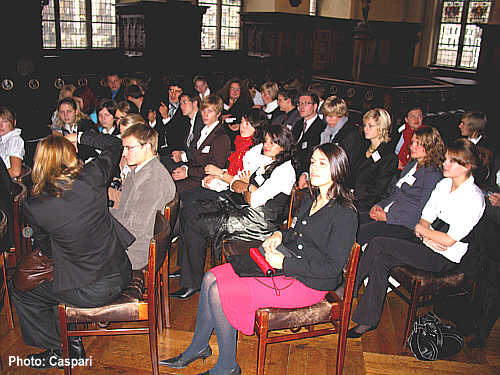
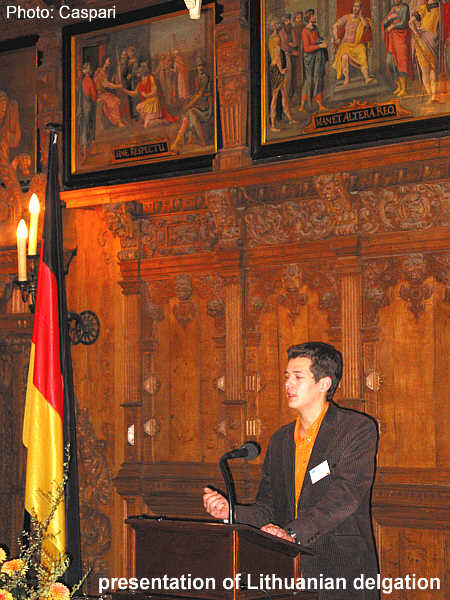
More than 100 delegates of "Model European Parliament" (MEP) were welcomed in the big hall of Bremen Town Hall on Monday 6th of November. 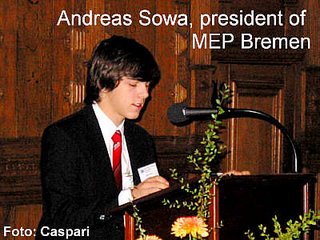 Welcome adresses were given by Willi Lemke, Senator for education and science, and by Helga Trüpel, member of European Parliament.
The MEP Baltic Sea Region Programme is a leadership programme for teenagers in Sweden, Finland, Denmark, Estonia, Latvia, Lithuania, Poland, Russia, and Northern Germany. In addition to these delegates, guests from Austria, Italy, the Netherlands and Spain are participating in Bremen. The goal of the MEP Baltic Sea Region programme is to develop interest and skills in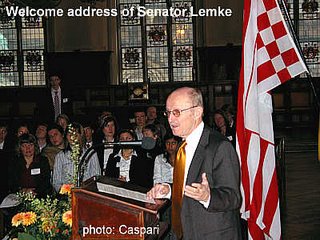 addressing high level international issues among high-school students in the eight countries around the Baltic Sea and other guest nations. The simulation of the European Parliament is used as a model for international sessions (General Assembly) in which young adults from the participating countries take part. The programme might serve as practice for future leaders and politicians.
During this week the young delegates will discuss European matters in five committees:
1) Foreign Affairs (main topic: conflicts in the Near East - Israel, Palestine)
2) Economic and Monetary Affairs (main topic: secure sustainable energy supply)
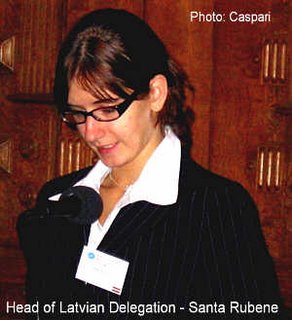 3) Environment, Public health and Food safety (main topic: prevention of infetious diseases)
4) Constitutional Affairs (main topic: gap between EU-institutions and Citizens)
5) Civil Liberties, Justice and Home Affairs (main topic: promote Integration of Migrants and fight Xenophobia)
Part of the programme will be also a meeting with Bremen NGOs, who deal with intercultural exchange and coopertion with the respective countries.
The MEP Baltic Sea Region in Bremen will end at Friday, when all delegates will meet for a final plenary. The final part will be opened by Jens Böhrnsen, Mayor of Bremen.
Links:
Homepage of MEP Baltic Sea Region Bremen
Short description ot MEP Bremen (German)
Homepage MEP Germany
MEP Baltic (Swedish Homepage)
Homepage MEP Netherlands
Wikipeda Page on European Communities Projects
Wikipeda on MEP
A Report from Denmark about MEP in Helsinki 2003 (Danish)
Homepage MEP Italy (Italian)
Homepage MEP Spain (Spanish)
A Report on the MEP-project from Irland
A diary of an Austrian MEP-Delegate about participation in MEP Vilnius in April 2006 (German language - newspaper "Der Standard")
A Latvian report about MEP in Vilnius April 2006 (Latvian language)
Information about MEP in Estonian Language
Press release of Valdas Adamkus, president of Lithuania, on MEP Vilnius in April 2006
On Thorildplans Gymnasiums Delegates (Sweden) in MEP Bremen
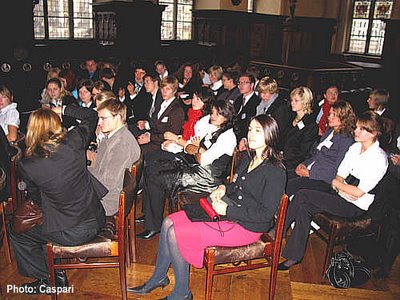
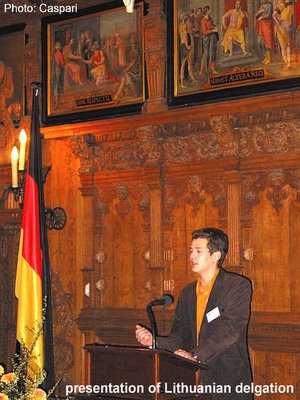
 Welcome adresses were given by Willi Lemke, Senator for education and science, and by Helga Trüpel, member of European Parliament.
The MEP Baltic Sea Region Programme is a leadership programme for teenagers in Sweden, Finland, Denmark, Estonia, Latvia, Lithuania, Poland, Russia, and Northern Germany. In addition to these delegates, guests from Austria, Italy, the Netherlands and Spain are participating in Bremen. The goal of the MEP Baltic Sea Region programme is to develop interest and skills in
 addressing high level international issues among high-school students in the eight countries around the Baltic Sea and other guest nations. The simulation of the European Parliament is used as a model for international sessions (General Assembly) in which young adults from the participating countries take part. The programme might serve as practice for future leaders and politicians.
During this week the young delegates will discuss European matters in five committees:
1) Foreign Affairs (main topic: conflicts in the Near East - Israel, Palestine)
2) Economic and Monetary Affairs (main topic: secure sustainable energy supply)
 3) Environment, Public health and Food safety (main topic: prevention of infetious diseases)
4) Constitutional Affairs (main topic: gap between EU-institutions and Citizens)
5) Civil Liberties, Justice and Home Affairs (main topic: promote Integration of Migrants and fight Xenophobia)
Part of the programme will be also a meeting with Bremen NGOs, who deal with intercultural exchange and coopertion with the respective countries.
The MEP Baltic Sea Region in Bremen will end at Friday, when all delegates will meet for a final plenary. The final part will be opened by Jens Böhrnsen, Mayor of Bremen.
Links:
Homepage of MEP Baltic Sea Region Bremen
Short description ot MEP Bremen (German)
Homepage MEP Germany
MEP Baltic (Swedish Homepage)
Homepage MEP Netherlands
Wikipeda Page on European Communities Projects
Wikipeda on MEP
A Report from Denmark about MEP in Helsinki 2003 (Danish)
Homepage MEP Italy (Italian)
Homepage MEP Spain (Spanish)
A Report on the MEP-project from Irland
A diary of an Austrian MEP-Delegate about participation in MEP Vilnius in April 2006 (German language - newspaper "Der Standard")
A Latvian report about MEP in Vilnius April 2006 (Latvian language)
Information about MEP in Estonian Language
Press release of Valdas Adamkus, president of Lithuania, on MEP Vilnius in April 2006
On Thorildplans Gymnasiums Delegates (Sweden) in MEP Bremen
20. Juli 2006
Nouvelle Europe - the way to the Baltic Sea Region
How much do people in France know about the Baltic Sea Region? How many french people know details about the 10 new members of European Union? "It is really not in fashion", explains Philippe Perchoc, president of french NGO "Nouvelle Europe". But his organisation wants to build bridges between the cultures. The project "Baltic Trip" wants to collect more information for french speaking public: the current role of agriculture, the flow of workers between "new" and "old" EU-members, the relation to Russia, the environmental protection - that are only some of the topics, which the project will cover (see document "dossier du voyage" - french) 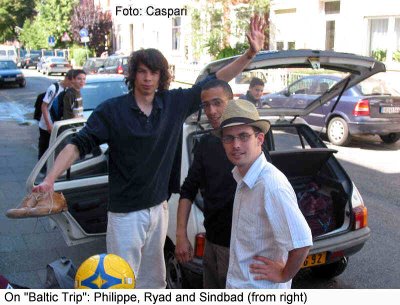 Phillipe Perchoc, Ryad Fagoul and Sindbad Iksel - three french travellers, two of them living in Colombes near Paris, one in Birmingham in England, will try to find out more about the current situation in eight different Baltic Sea States. From July 15 to September 1 st 2006 they will be on travel through Germany, Poland, Lithuania, Latvia, Estonia, Finland, Sweden and Denmark.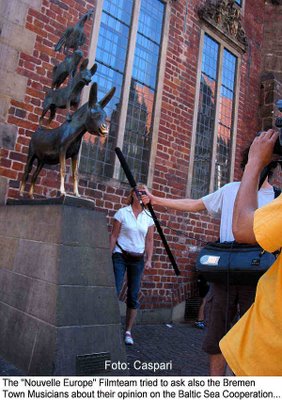
On July 17th the three "Baltic Travellers" spent one day in the Hanseatic City of Bremen. "Is the Hanseatic Tradition still alive? How succesful were the measures to protect the environment of the Baltic Sea? What vision Germans have on the future development of the European Union and the Baltic Sea Region?" These and other questions the three travellers asked to members of INFOBALT, the Bremen located NGO working with Baltic Sea Cooperation. The "Baltic trip" of Philippe, Ryad and Sindbad is also a media project. A cooperation with German-French TV-Station ARTE helped to produce a several short video-clips, a documentary and lots of photos. A Bloggersite accompanies the travel and gives space for spontanous reports and comments.
 The timetable of the trip: Warshaw around July 22th, Vilnius / Kaunas around July 27th, Riga around August 3rd, Tallinn around August 11th, Helsinki around August 15th, Stockholm around August 20th, Copenhagen around August 25th. Quite a long trip - but at the end a lot of material will be collected, and it will be interesting to observe whether the three friends have changed a bit the attitude of French people towards the Baltic Sea Region.
"We have members of our organisation 'Nouvelle Europe' also in some of the countries we now visit," explains Philippe, "and they of course were very eager to help us in preparation of our trip." Possibly there will be many new friends afterwards ... For all those people in the Baltic States, who would like to contact the three French travellers during their trip, and possibly arrange additional meetings, they offer a contact via Email: philippe.perchoc@gmail.com
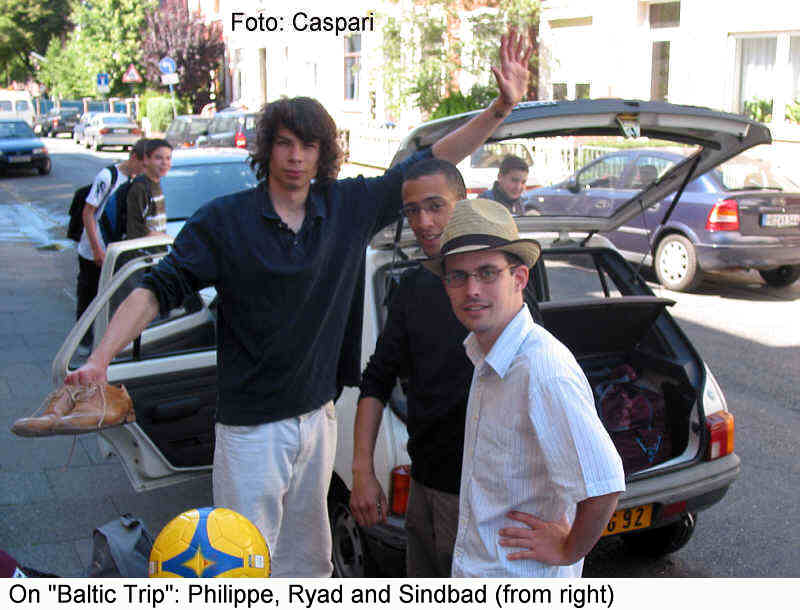 Phillipe Perchoc, Ryad Fagoul and Sindbad Iksel - three french travellers, two of them living in Colombes near Paris, one in Birmingham in England, will try to find out more about the current situation in eight different Baltic Sea States. From July 15 to September 1 st 2006 they will be on travel through Germany, Poland, Lithuania, Latvia, Estonia, Finland, Sweden and Denmark.
On July 17th the three "Baltic Travellers" spent one day in the Hanseatic City of Bremen. "Is the Hanseatic Tradition still alive? How succesful were the measures to protect the environment of the Baltic Sea? What vision Germans have on the future development of the European Union and the Baltic Sea Region?" These and other questions the three travellers asked to members of INFOBALT, the Bremen located NGO working with Baltic Sea Cooperation. The "Baltic trip" of Philippe, Ryad and Sindbad is also a media project. A cooperation with German-French TV-Station ARTE helped to produce a several short video-clips, a documentary and lots of photos. A Bloggersite accompanies the travel and gives space for spontanous reports and comments.
 The timetable of the trip: Warshaw around July 22th, Vilnius / Kaunas around July 27th, Riga around August 3rd, Tallinn around August 11th, Helsinki around August 15th, Stockholm around August 20th, Copenhagen around August 25th. Quite a long trip - but at the end a lot of material will be collected, and it will be interesting to observe whether the three friends have changed a bit the attitude of French people towards the Baltic Sea Region.
"We have members of our organisation 'Nouvelle Europe' also in some of the countries we now visit," explains Philippe, "and they of course were very eager to help us in preparation of our trip." Possibly there will be many new friends afterwards ... For all those people in the Baltic States, who would like to contact the three French travellers during their trip, and possibly arrange additional meetings, they offer a contact via Email: philippe.perchoc@gmail.com
19. Juni 2006
SOS! ST.PETERSBURG - DANGEROUS PROJECTS THREATEN MARINE ENVIRONMENT
The government of Russia and St.-Petersburg authorities have launched two unprecedentedly ambitious and highly dangerous projects on the shore of the Baltic sea.
 The project of the Seaport Terminal in the western part of the city includes inwashing of 450 hectares for the port itself and apartment blocks and buisiness buildings as well. According to the plan, three berths for cruise vessels more than 300 m in length will be built already by 2008. Experts believe that the inwashing of huge territory will harm the ecosystem of the region. As a result of the construction works the water will be roiled with the polluted subsoil from the seabed, which can destroy the habitat of the sea species. The subsoil will also wash towards the mouth of the Neva river and alter it's streamway. This will reduce the flow of fresh water into the Finnish Gulf and lead to further changes in ecosystem.
 The second related project is the Western Speed Diameter - an 8-lane tall highway which will cross the Finnish Gulf area from south to the north to connect the sea port with Baltic and Scandinavian countries.
In the northern part of the city the highway will go along the border of the Yuntolovskiy nature reserve and cross the forest witch serves as it's buffer zone. The wetlands of the Yuntolovskij reserve provide a resting site for migratory birds flying from Arctic region to Western Europe and Scandinavia. 13 of the bird species are listed in the Red Data Book of the Baltic Region.
According to independent experts, noise and pollution from the highway will destroy the habitat of migratory birds and threaten biodiversity of the Baltic region. This violates international conventions, as:
- Rio de Janeiro convention of biological diversity (articles 8c, 8e);
- Helsinki convention on the Protection of the Marine Environment of the Baltic Sea Area (article 15).
Also as the highway is going to pass through lowlands it would be necessary to drain the territory before construction. The draining will change the hydrosystem of the Lahta region which makes up an important part of the Finnish Gulf. The situation can become even worse as the city governer has recently announced about a plan to build Nissan plant close to the Yuntolovskij reserve. According to the statement, the streamway of the Chernaya river which flows to the Lahta bay will be changed in order to build the industrial area.
ACCESS TO INFORMATION More than 27 000 residents have signed against the sea terminal and Western High Speed Diameter but still the city government does not respond to the protests.
The city authorities do not provide people with information about the projects. So far numerous requests for environmental assessment documents remain unanswered. The public hearings of the projects were held formally and the residents were not properly informed about them.
Also, in violation of the Helsinki convention (article 7.1) and Espoo convention on environmental impact assessment in transboundary context, the Baltic countries were not notified about the proposed activity.
HOW YOU CAN HELP
As far as we were not able to receive the information on environmental impact of the projects we are urged to address you for help.
Please send requests for environmental information in accordance with international conventions (Espoo convention, Article 3.7). We will also be grateful if you take part in consultations on these projects (Espoo convention, article 5) and in public environmental expertise.
Note: it is important to take action as soon as possible as the implementation of the projects has already started.
THE STATE OF THE PROJECTS The planning decision on the Passenger Seaport Terminal and Western High Speed Diameter was included into the General plan of the city development accepted in 2005. The project of the Passenger Seaport Terminal was approved on March 30 by Glavgosekspertiza (russian regulatory authority).
The project of Western High Speed Diameter is divided into three parts which undergo all the procedures separately. The southern part of the highway has passed the environmental impact expertise and the construction works are already started. The central part has passed the expertise though it is supposed to be built last. The project of the northern part is not yet ready.
RELATED LINKS http://www.mfspb.ru/en/ - learn more about the Seaport Passenger Terminal (in English) http://www.skyscrapercity.com/showthread.php?t=296908 - the Seaport Passenger Terminal and Western High Speed Diameter on the map of St.-Petersburg (in English) http://www.ecosafe.pu.ru/RB/Yuntolov/yuonEC.html – Yuntolovskiy reserve: Site identification under EC_Nature 2000-CorineInfBiotopes (in English) Public organization "Save Yuntolovo" http://sos-yuntolovo.spb.ru
Contact us:
Public organization "Save Yuntolovo" http://sos-yuntolovo.spb.ru
Tatyana Skrodenis arttri@detisite.ru
Vera Ponomareva vera.ponomareva@gmail.com +7 812 343 82 16
 The project of the Seaport Terminal in the western part of the city includes inwashing of 450 hectares for the port itself and apartment blocks and buisiness buildings as well. According to the plan, three berths for cruise vessels more than 300 m in length will be built already by 2008. Experts believe that the inwashing of huge territory will harm the ecosystem of the region. As a result of the construction works the water will be roiled with the polluted subsoil from the seabed, which can destroy the habitat of the sea species. The subsoil will also wash towards the mouth of the Neva river and alter it's streamway. This will reduce the flow of fresh water into the Finnish Gulf and lead to further changes in ecosystem.
 The second related project is the Western Speed Diameter - an 8-lane tall highway which will cross the Finnish Gulf area from south to the north to connect the sea port with Baltic and Scandinavian countries.
In the northern part of the city the highway will go along the border of the Yuntolovskiy nature reserve and cross the forest witch serves as it's buffer zone. The wetlands of the Yuntolovskij reserve provide a resting site for migratory birds flying from Arctic region to Western Europe and Scandinavia. 13 of the bird species are listed in the Red Data Book of the Baltic Region.
According to independent experts, noise and pollution from the highway will destroy the habitat of migratory birds and threaten biodiversity of the Baltic region. This violates international conventions, as:
- Rio de Janeiro convention of biological diversity (articles 8c, 8e);
- Helsinki convention on the Protection of the Marine Environment of the Baltic Sea Area (article 15).
Also as the highway is going to pass through lowlands it would be necessary to drain the territory before construction. The draining will change the hydrosystem of the Lahta region which makes up an important part of the Finnish Gulf. The situation can become even worse as the city governer has recently announced about a plan to build Nissan plant close to the Yuntolovskij reserve. According to the statement, the streamway of the Chernaya river which flows to the Lahta bay will be changed in order to build the industrial area.
ACCESS TO INFORMATION More than 27 000 residents have signed against the sea terminal and Western High Speed Diameter but still the city government does not respond to the protests.
The city authorities do not provide people with information about the projects. So far numerous requests for environmental assessment documents remain unanswered. The public hearings of the projects were held formally and the residents were not properly informed about them.
Also, in violation of the Helsinki convention (article 7.1) and Espoo convention on environmental impact assessment in transboundary context, the Baltic countries were not notified about the proposed activity.
HOW YOU CAN HELP
As far as we were not able to receive the information on environmental impact of the projects we are urged to address you for help.
Please send requests for environmental information in accordance with international conventions (Espoo convention, Article 3.7). We will also be grateful if you take part in consultations on these projects (Espoo convention, article 5) and in public environmental expertise.
Note: it is important to take action as soon as possible as the implementation of the projects has already started.
THE STATE OF THE PROJECTS The planning decision on the Passenger Seaport Terminal and Western High Speed Diameter was included into the General plan of the city development accepted in 2005. The project of the Passenger Seaport Terminal was approved on March 30 by Glavgosekspertiza (russian regulatory authority).
The project of Western High Speed Diameter is divided into three parts which undergo all the procedures separately. The southern part of the highway has passed the environmental impact expertise and the construction works are already started. The central part has passed the expertise though it is supposed to be built last. The project of the northern part is not yet ready.
RELATED LINKS http://www.mfspb.ru/en/ - learn more about the Seaport Passenger Terminal (in English) http://www.skyscrapercity.com/showthread.php?t=296908 - the Seaport Passenger Terminal and Western High Speed Diameter on the map of St.-Petersburg (in English) http://www.ecosafe.pu.ru/RB/Yuntolov/yuonEC.html – Yuntolovskiy reserve: Site identification under EC_Nature 2000-CorineInfBiotopes (in English) Public organization "Save Yuntolovo" http://sos-yuntolovo.spb.ru
Contact us:
Public organization "Save Yuntolovo" http://sos-yuntolovo.spb.ru
Tatyana Skrodenis arttri@detisite.ru
Vera Ponomareva vera.ponomareva@gmail.com +7 812 343 82 16
10. Juni 2006
Concern about new NGO-legislation in the CBSS countries

Statement from Baltic Sea NGO Forum to the 6th Baltic Sea States Summit in Reykjavik 8th June 2006
Concern about new NGO-legislation in the CBSS countries. We, the members of the Consultative Committee for the Baltic Sea NGO Forum, wish to express our deep concern about the new legislation for the NGO-sector, both in the EU-member states and in Russia, legislation brought forward under the cover of "fight against terrorism", after the event of September 11th 2001.
Free and independent NGOs are a very important part of the civic society, and have a very decisive role in a democratic society, both as “watchdogs” and initiators of the political process. If they are hampered in their work by government control in form of compulsory registration, compulsory delivery of membership lists and financial control, it will have a very detrimental effect on our democratic society and political development.
Moreover, this control legislation will, in our opinion, not be an effective instrument in the fight against terrorism. On the other hand, a dynamic civic society, and independent NGOs can be an important contributor in our common fights against terrorism.
In Russia the new NGO-legislation will hamper the cooperation of the civic society in the political process, and will prevent the very important international cooperation between NGOs. In this legislation, Russia indicates that it has been inspired by the EU-proposals, and this may hamper the EU-countries from complaining to Russia over this restriction in democracy.
We, the members of the Consultative Committee for the Baltic Sea NGO Forum, therefore request the 6th Baltic Sea States Summit to: - keep a close watch over the NGO-legislation in the membership countries in order to respect the freedom of associations, - work for a close cooperation between CBSS and the NGOs in the CBSS member states, - include a clear statement in the EU-Northern Dimension of the importance of the cooperation between government and civic society, - work towards a simplification of the visa-rules in connection with NGO-arrangements.
Free and independent NGOs are a very important part of the civic society, and have a very decisive role in a democratic society, both as “watchdogs” and initiators of the political process. If they are hampered in their work by government control in form of compulsory registration, compulsory delivery of membership lists and financial control, it will have a very detrimental effect on our democratic society and political development.
Moreover, this control legislation will, in our opinion, not be an effective instrument in the fight against terrorism. On the other hand, a dynamic civic society, and independent NGOs can be an important contributor in our common fights against terrorism.
In Russia the new NGO-legislation will hamper the cooperation of the civic society in the political process, and will prevent the very important international cooperation between NGOs. In this legislation, Russia indicates that it has been inspired by the EU-proposals, and this may hamper the EU-countries from complaining to Russia over this restriction in democracy.
We, the members of the Consultative Committee for the Baltic Sea NGO Forum, therefore request the 6th Baltic Sea States Summit to: - keep a close watch over the NGO-legislation in the membership countries in order to respect the freedom of associations, - work for a close cooperation between CBSS and the NGOs in the CBSS member states, - include a clear statement in the EU-Northern Dimension of the importance of the cooperation between government and civic society, - work towards a simplification of the visa-rules in connection with NGO-arrangements.
The Baltic Sea NGO FORUM is a NGO-network with partners in all CBSS-countries. More information is available at
www.cbss-ngo.de - German platform of the Baltic Sea NGO Network
http://www.cbss-ngo-pl.org - NGO FORUM 2005 in Gdynia / Poland
BALTIC SEA NGO FORUM 2006 in Stockholm / Sweden
www.cbss-ngo.de - German platform of the Baltic Sea NGO Network
http://www.cbss-ngo-pl.org - NGO FORUM 2005 in Gdynia / Poland
BALTIC SEA NGO FORUM 2006 in Stockholm / Sweden
16. April 2006
German NGOs prepare for BALTIC SEA NGO FORUM 2006 in Sweden
The German NGO Initiative Baltic Sea Cooperation, a loose coalition of German NGOs interested in the Baltic Sea Region, held a meeting on Saturday 8th of April in the Town Hall of Rostock.
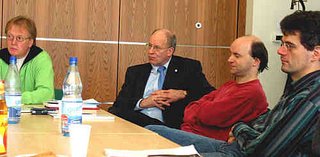 The Initiative works as a link to the Baltic Sea NGO Network, which has organised the annual BALTIC SEA NGO FORUM since 2001. The Baltic Sea NGO Network since then was developed parallel to activities of the Council of Baltic Sea States (CBSS), which was founded in 1992.
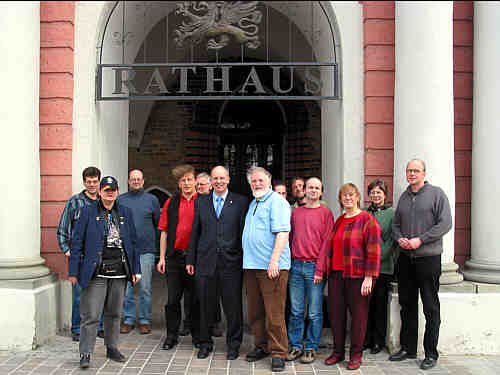
Roland Methling, Mayor of Rostock Hanseatic Town, welcomed the NGOs in the Rostock Town Hall. Telling about some recent developments in Rostock and at the German Baltic Sea Coast, he expressed his readiness for closer cooperation also in frame of the NGO FORUM. As Rostock Town is f. ex. active in the Union of Baltic Cities (UBC), this could be also a link to the NGO-community. 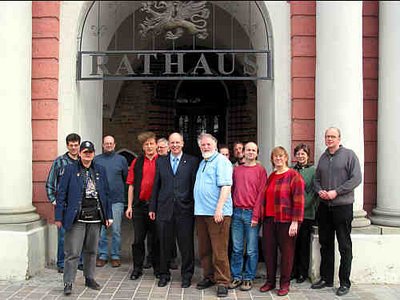 Albert Caspari, the German Focal Point of the Baltic Sea NGO Network (co-ordinator of activities on German side), reported about two preparation meetings for BALTIC SEA NGO FORUM 2006 in Sweden (one held in January 2006 in Copenhagen, one in March/April 2006 in Stockholm).
 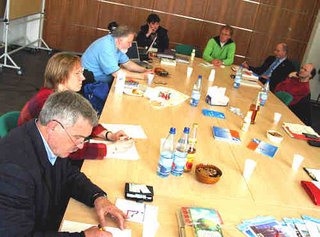 The participants of the NGO-meeting expressed their hope, that the work of the Baltic Sea NGO Networks German Focal Point would be possible to continue, even if no help in financing was available until now. The efforts for co-operation between German NGOs from different Northern German Federal States still has no partner on the Governmental bodies, as the German Federal States do not have a common concept for Baltic Sea Cooperation. The only partner for discussion and exchange of viewpoints until now is an advisor on Baltic Sea Cooperation at the German Federal Foreign Office in Berlin.
Draft paper on "NGO ESSENTIALS" (to be discussed):
Essentials for Regulating the Activities of Non-Governmental Organizations with special reference to state authorities
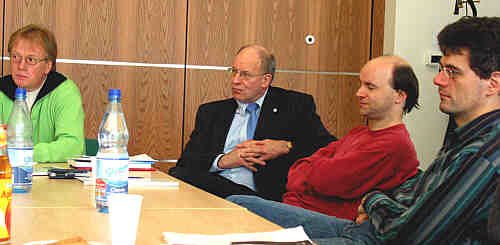 The Initiative works as a link to the Baltic Sea NGO Network, which has organised the annual BALTIC SEA NGO FORUM since 2001. The Baltic Sea NGO Network since then was developed parallel to activities of the Council of Baltic Sea States (CBSS), which was founded in 1992.
Roland Methling, Mayor of Rostock Hanseatic Town, welcomed the NGOs in the Rostock Town Hall. Telling about some recent developments in Rostock and at the German Baltic Sea Coast, he expressed his readiness for closer cooperation also in frame of the NGO FORUM. As Rostock Town is f. ex. active in the Union of Baltic Cities (UBC), this could be also a link to the NGO-community.
 Albert Caspari, the German Focal Point of the Baltic Sea NGO Network (co-ordinator of activities on German side), reported about two preparation meetings for BALTIC SEA NGO FORUM 2006 in Sweden (one held in January 2006 in Copenhagen, one in March/April 2006 in Stockholm).
 The NGOs welcomed the proposals for four workshop-topics. Albert Caspari explained, that the Swedish organisers of the upcoming NGO FORUM will try to organise additional opportunities for meetings also for those initiatives, whose key aspects of activity probably will not be served by one of the main workshops.
The detailed programme for the BALTIC SEA NGO FORUM 2006 is still to be prepared by the Consultative Council (the Focal Points of every CBSS state - Norway, Finland, Sweden, Estonia, Latvia, Lithuania, Poland, Denmark, Germany). The NGO FORUM 2006 is going to take place in Stockholm at 5.-7th of October 2006.
The NGOs representatives at the Rostock meeting discussed some actual issues of the Baltic Sea Region, like HELCOM Baltic Sea Action Plan, problems of Atomic Power Use, sustainable use of energy, Oil Transport at Sea, and new NGO-laws in Russia and other Baltic Sea States. Several regional initiatives of Mecklenburg-Vorpommern presented their activities.
The NGOs representatives at the Rostock meeting discussed some actual issues of the Baltic Sea Region, like HELCOM Baltic Sea Action Plan, problems of Atomic Power Use, sustainable use of energy, Oil Transport at Sea, and new NGO-laws in Russia and other Baltic Sea States. Several regional initiatives of Mecklenburg-Vorpommern presented their activities.
A lively discussion on opportunities of democratic participation in decision processes followed. Lutz Huettel and Dr. Burkhard Luber, two participants of the meeting, initiated the formulation of "NGO essentials" - a declaration of most essential rights, which all NGOs of the Baltic Sea Region should be granted in all CBSS-countries. The initiators hope that the text could function like a catalyst for a discussion among NGOs from different Baltic Sea States.
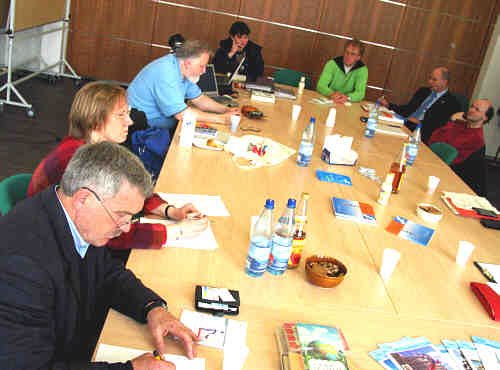 The participants of the NGO-meeting expressed their hope, that the work of the Baltic Sea NGO Networks German Focal Point would be possible to continue, even if no help in financing was available until now. The efforts for co-operation between German NGOs from different Northern German Federal States still has no partner on the Governmental bodies, as the German Federal States do not have a common concept for Baltic Sea Cooperation. The only partner for discussion and exchange of viewpoints until now is an advisor on Baltic Sea Cooperation at the German Federal Foreign Office in Berlin.
One project between NGOs in Germany and Poland was presented at a good example of positive results of the BALTIC SEA NGO FORUM in Gdynia / Poland in 2005.
Among the participants of the NGO FORUM 2005 were representatives of Fundacja Slonecznik Pomorskie (Gdansk) and Kulturzentrum Lagerhaus (Bremen). As a result of the NGO FORUM they agreed in starting a project, which aimed in bringing NGOs of both towns together, improving the contacts and starting new projects on various fields of activity.
The Bremen-Gdansk-project could be taken as a "good example" for NGO-cooperation (in contact to GOs), as this project was a direct result of BALTIC SEA NGO FORUM 2005. More information is available (english!) at http://www.hb-gd-ngo-act.de/meeting.html)
Among the participants of the NGO FORUM 2005 were representatives of Fundacja Slonecznik Pomorskie (Gdansk) and Kulturzentrum Lagerhaus (Bremen). As a result of the NGO FORUM they agreed in starting a project, which aimed in bringing NGOs of both towns together, improving the contacts and starting new projects on various fields of activity.
The Bremen-Gdansk-project could be taken as a "good example" for NGO-cooperation (in contact to GOs), as this project was a direct result of BALTIC SEA NGO FORUM 2005. More information is available (english!) at http://www.hb-gd-ngo-act.de/meeting.html)
Essentials for Regulating the Activities of Non-Governmental Organizations with special reference to state authorities
- All NGOs´ acting falls under the specifications of the Universal Declaration of Human Rights, where especially articles 13 (freedom of movement and residence), 17 (right of property ownership), 19 (freedom of opinion and expression), 20 (right of association), 29+30 (exercising rights and freedoms) are relevant.
- NGO acting must be in conformity with international law regulations which basicly are used by the United Nations and national law regulations of the country in which the NGOs are acting, if it is not in conflict with international principles of human rights.
- The acting of NGOs should not be subjective to more restrictive regulations than those of the penal and civil laws of the country in which the NGO is acting.
- The legal regulations for starting and acting of NGOs should not be repressive, i.e. those regulations should kept on a minimum of procedures.
- Elements of a minimum transparency of NGOs should be: Presenting statutes, informing about changes in the NGO´s responsible board, transparency of finances.
- Conflicts between and NGOs and state authorities have to be submitted to and decided by independent courts with the possibility to appeal against court decisions on the base of the constitution and of the Declaration of Human Rights.
- NGOs, especially those of minorities, should be able to spread their information, news, and commitments by independent media in every language they like without discrimination by governmental authorities.
13. Januar 2006
Environmentalists discuss Gas-Pipeline
The Coalition Clean Baltic (CCB), a Baltic Sea wide network of environmental organisations, has raised its concern about the German-Russian Megaproject of a gas-pipeline crossing the Baltic Sea. "We all need open information sources, access to EIA materials, to be sure that all environmental impacts were considered thoroughly and sufficiently," says Olga Senova, CCB-member and eco-acticvist from Russia.
But many members of the network are not ready to express a final opinion, as many clear details of the planned project are currently lacking.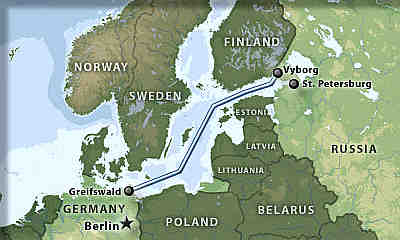 "We should collect the information about possible environmental threats and what it could cost to the Baltic Sea," hopes Taavi Nuum from Estonian Green Movement. What he points to seems to be partly just a hope - as information about the plans of the Russian-German consortium are not available yet. "So far, we do not have sufficient and reliable information about expected environmental impacts, and cannot make valid conclusions," says Sergey Anatskiy (Baltic Federation of Fishermen) from Russia.
Business, just big politics, ignorance, or what?
But there are also other voices to be found. Some call the whole projekt "a business issue", other "very much a political issue". Voices are mixed, and concerns regarding a possible threat to the environment come together with disappointment, that Russia and Germany may try to keep the discussion as just an internal issue.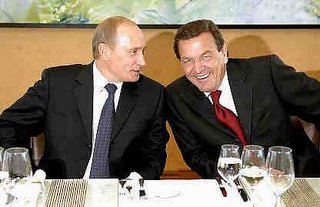 "We expect that all the HELCOM member countries, especially those which also signed the Espoo Convention, like Germany, really start the cross-border EIA." Such statement voices Valdur Lahtvee, chairman of the Coalition Clean Baltic. (Source for all CCB-statements: CCB-Newsletter)
German eco's in silence
But where are the statements of the German environmentalists? Not much has been heard or seen up to now. Could it be the effect of the new "big coalition" of conservatives and socialdemocrates in Berlin, that irritate German ecologists? Quite many of the more experienced eco-functioneers had become used to have a "Green" partner also in the German government. Some environmentalists where offered well paid jobs in ministries and other institutions during the rule of the red-green's. Suddently the political szene has turned upside down. The former coalition-partner of the Greens suddently choose a new "best friend", who does not hide a strong willingness to reintroduce atomic power stations. And Joschka Fishers "best friend", the "dear Gerd", has made his personal deal with another "best friend" in Moskow, for assuring his personal earnings. Fisher himself has disappeared from the political szene. New green leaders currently look quite like the old ones, but even older. It does not seem to be popular any more to fight for the environment very much.
What may be the background of all this political games? Will the environment be the main looser?
The pipeline from Russia to Germany will have 1200 km of its route on the bottom of the Baltic Sea. Some already have made up their minds: "Well, apart from some limited areas of old stuff from last war it will be only mudd on the ground of the Baltic Sea." Who cares?
Different interests
Other opponents step into the arena. The 24th session of the presidium of the Baltic Assembly, where law-makers of Lithuania, Latvia, Estonia and Poland came together in Estonian capital Tallinn, passed a resolution concerning the construction of the North European Gas Pipeline (NEGP) urging Russia and Germany to consider ecological and economic interests of the four states. (as for ex. Russian paper Kommersant reports).
The resolution adopted in Estonia contains an appeal to the parliaments of the countries situated in the area of the Baltic Sea and the Council of Ministers of Baltic states to pay a special attention and look into the North European gas main project for its compliance with treaties on the protection of the Baltic Sea and laws of the European Union. The four undersigning states speak up clearly: The North European Gas Pipeline disregards interests of Baltic states as well as those of Poland.
But isn't it then again just a "business issue"? Do those, who protest against the project, just want to have a "piece of the cake"?
One other expert tries to calm emotions down. Andris Piebalgs, a Latvian, holds the post as EU-commissioner for energy. "I really have no doubts ... that the companies involved will do everything necessary for protection of the environment," he was quoted by REUTERS.
But it seems interesting to follow what some Russian press is expecting from the side of one of the smallest Baltic Sea States, Estonia. Three of the political fractions in Estonian parliament could initiatite a widening of Estonian sea borders to 12sm. If Finland would join the Estonian initiative - the gas-pipeline could be blocked. Once again, some question: Are governments of Estonia, Latvia and Lithuania (all three strong opponents of the German-Russian pipeline) got a "green heart", or is it just for trying to get a share of the business?
May be the year 2006 will show it soon.
EIA = Environmental Impact Assessment
Baltic Assembly = was set up in 1991 as a deliberative body on the cooperation between parliaments of Estonia, Latvia and Lithuania. It consists of 20 people from each of the countries.
But many members of the network are not ready to express a final opinion, as many clear details of the planned project are currently lacking.
 "We should collect the information about possible environmental threats and what it could cost to the Baltic Sea," hopes Taavi Nuum from Estonian Green Movement. What he points to seems to be partly just a hope - as information about the plans of the Russian-German consortium are not available yet. "So far, we do not have sufficient and reliable information about expected environmental impacts, and cannot make valid conclusions," says Sergey Anatskiy (Baltic Federation of Fishermen) from Russia.
 Business, just big politics, ignorance, or what?
But there are also other voices to be found. Some call the whole projekt "a business issue", other "very much a political issue". Voices are mixed, and concerns regarding a possible threat to the environment come together with disappointment, that Russia and Germany may try to keep the discussion as just an internal issue.
 "We expect that all the HELCOM member countries, especially those which also signed the Espoo Convention, like Germany, really start the cross-border EIA." Such statement voices Valdur Lahtvee, chairman of the Coalition Clean Baltic. (Source for all CCB-statements: CCB-Newsletter)
German eco's in silence
But where are the statements of the German environmentalists? Not much has been heard or seen up to now. Could it be the effect of the new "big coalition" of conservatives and socialdemocrates in Berlin, that irritate German ecologists? Quite many of the more experienced eco-functioneers had become used to have a "Green" partner also in the German government. Some environmentalists where offered well paid jobs in ministries and other institutions during the rule of the red-green's. Suddently the political szene has turned upside down. The former coalition-partner of the Greens suddently choose a new "best friend", who does not hide a strong willingness to reintroduce atomic power stations. And Joschka Fishers "best friend", the "dear Gerd", has made his personal deal with another "best friend" in Moskow, for assuring his personal earnings. Fisher himself has disappeared from the political szene. New green leaders currently look quite like the old ones, but even older. It does not seem to be popular any more to fight for the environment very much.
What may be the background of all this political games? Will the environment be the main looser?
The pipeline from Russia to Germany will have 1200 km of its route on the bottom of the Baltic Sea. Some already have made up their minds: "Well, apart from some limited areas of old stuff from last war it will be only mudd on the ground of the Baltic Sea." Who cares?
Different interests
Other opponents step into the arena. The 24th session of the presidium of the Baltic Assembly, where law-makers of Lithuania, Latvia, Estonia and Poland came together in Estonian capital Tallinn, passed a resolution concerning the construction of the North European Gas Pipeline (NEGP) urging Russia and Germany to consider ecological and economic interests of the four states. (as for ex. Russian paper Kommersant reports).
The resolution adopted in Estonia contains an appeal to the parliaments of the countries situated in the area of the Baltic Sea and the Council of Ministers of Baltic states to pay a special attention and look into the North European gas main project for its compliance with treaties on the protection of the Baltic Sea and laws of the European Union. The four undersigning states speak up clearly: The North European Gas Pipeline disregards interests of Baltic states as well as those of Poland.
But isn't it then again just a "business issue"? Do those, who protest against the project, just want to have a "piece of the cake"?
One other expert tries to calm emotions down. Andris Piebalgs, a Latvian, holds the post as EU-commissioner for energy. "I really have no doubts ... that the companies involved will do everything necessary for protection of the environment," he was quoted by REUTERS.
But it seems interesting to follow what some Russian press is expecting from the side of one of the smallest Baltic Sea States, Estonia. Three of the political fractions in Estonian parliament could initiatite a widening of Estonian sea borders to 12sm. If Finland would join the Estonian initiative - the gas-pipeline could be blocked. Once again, some question: Are governments of Estonia, Latvia and Lithuania (all three strong opponents of the German-Russian pipeline) got a "green heart", or is it just for trying to get a share of the business?
May be the year 2006 will show it soon.
EIA = Environmental Impact Assessment
Baltic Assembly = was set up in 1991 as a deliberative body on the cooperation between parliaments of Estonia, Latvia and Lithuania. It consists of 20 people from each of the countries.
Abonnieren
Posts (Atom)


 Posts
Posts


