1. November 2005

Human Rights, NGOs and the Baltic Sea Region

On a meeting of the German Baltic Sea NGO Initiative at Oct 29, 2005 in Hamburg I have been asked to act as the German contact person for the NGO Baltic Sea Network on the issue of Human Rights. The subsequent paper lists some aspects of the Human Rights topic and deals with the question how NGOs generally and NGOs in the Baltic Sea countries specifically can promote that topic. Comments are welcome!

Contact: hubluber@web.de * Work: http://www.dieschwelle.de/ *
Blog: http://www.nienburg44.blogspot.com/

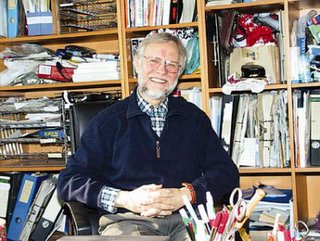
Dr Burkhard Luber
The Human Rights, Non-Governmental Organizations
and the Baltic Sea Region

- An initial navigation of uncharted waters -


Making the Human Rights universally was an act of the Western Allies against German Fascism in the mid of the 20th century. That it has been a Western concept is symbolized in choosing New York as the United Nations headquarter. Launching the Declaration of Human Rights demonstrated what the WW II winners thought to become world-wide standard. For more than five decades this concept did not face major problems (Cynics might say: It had not much genuine impact on the international community either). References to Human Rights worked well for inauguration speeches, sometimes it was a tool of reciprocal reproaches in the East-West Conflict. But it never underwent the major test, whether the UN countries would take the concept earnest and work with emphasis against countries violating Human Rights on a major scale.

Three events at the end of the last and the beginning of the current millennium changed this situation:

First:
The disintegration of Yugoslavia with its broad-scale violating of human rights showed the sensitivity of the Human Rights concept and its application in conflicts of multi-ethnic countries.

Second:
The development of religions in the world has two contrasting spiritual tendencies. On the one hand you see an impressive secularization. Religion becomes less and less a decisive reference point for the population. It is merely an individual attitude not having a societal impact. On the other hand we see the renaissance of religious intolerance and fanatism.

Third:
The 911 terrorist attacks in the USA changed the dealing with the HR concept in three ways:

First it marked the long lasting universalism of the Human Rights concept. More and more people and countries are challenging this Human Rights uni­ver­salism by ranking religious values higher than observing Human Rights standards. That has even lead to an increasing disqualification of the Human Rights concept as a “Western imported product” to dominate the world. For an increasing number of countries the universalism of Human Rights is no longer valid, though so far none of those countries has acquitted its UN membership.

But 911 has also another 2nd consequence for the weakening of the universal Human Rights concept: Since the Bush administration narrowed its policy guidelines to concentrate more or less totally towards the war against terrorism, the universal observance of Human Rights became obsolete. Bush became more and more insensitive towards the Human Rights account of the allies he chose in his anti-terrorism strategy. That is at least evident for such authoritarian regimes like Turkme­nistan, Uzbekistan, Pakistan and Saudi Arabia.

Third consequence: Countries beside the USA took Bush´s anti-terrorism strategy as a welcome chance to claim membership in this anti-terrorist alliance. That gave them the chance to declare as "terrorists" also in-house freedom-fighters, seeking secession minorities and other counter-government actors on their own territory. Prominent example is Russia´s stance against Chenya and other independence movements in the Caucasus, but other governments in Africa and Asia are taking that chance of political rhetoric too and more might take it in future. So Bush´s crusade against terrorism generates a severe decrease of relevance for the Human Right concept.

The Relevance of the Human Rights concept for NGOs
NGOs are natural partners of the Human Rights concept, since their specific contributions to a civil society - like: gender issues, lobbying for minorities and free media - can mostly take their justifications from the “Declaration of Human Rights”. NGOs can be watch dogs, which monitor the Human Rights account of their own government and society and - based on the universalism of the Human Rights concept - also internationally. NGOs are also suitable Human Rights monitors, since they are closer to the societal reality and the needs and wishes of the population than higher ranking administration and governments. And due to their small organization profile and well elaborated information exchange and brainstorming capacities, NGOs can better formulate designs for addressing and solving single Human Rights deficiencies than large government ministries and agencies.

When addressing the question whether there are there specifics for the Human Rights work for NGOs in the Baltic sea region one has to make a short political assessment of that region. Its political changes since the end of the Cold War are significant: Beside Sweden, Finland and Russia all the Baltic Sea region countries are now NATO members and beside Norway and Russia all are EU members too. However simultaneously to the membership expansion of NATO and EU in the Baltic Sea Region the relevance of both these GOs has dramatically decreased. NATO (at least as an independent military factor of itself, i.e. more than a mere logistic contributor to the US worldwide military strategy) does not play an important role in all curren$t major military events (Wars on the Balkan, Iraq War, War against terrorism). NATO´s irrelevance is matched by an EU being in a major crisis due to growingly irritations from the consequences of its recent expansion, its failed constitution ratification process and the looming danger of not having a properly approved budget in 2007. This is the broader international political context in which NGOs in the Baltic Sea Region are acting and the question is whether specific fields of NGOs work in that region can be defined. Here are some proposals:

Minority issues
which are relevant for the Russian minority in Estonia and Latvia. Here NGOs can contribute to stabilize a fair and just minority regime which can also have relevance to other European regions of multi-ethnicity (like SO-Europe and the Roma in Central Europe).

Work Employment Issues
which are relevant for all Baltic Sea countries be they tigers (Estonia) or trailers (Germany). Based on Article 23 of the Declaration of Human Rights, NGOs can contribute with proposals how to implement the Human Right for employment in economies, in which profit increase and work force decrease are complementary to each other. NGOs should publicly brainstorm the issue of unemployment much more ambitious than their governments do it, since governments for decades are unsuccessfully waiting for more economic growth with the vague hope that this would generate new jobs. Employment concepts drafted by NGOs could contrast that blind road thinking of governments by emphasizing that unemployment is no longer a temporary event but is the structural consequence of growing digitalisation and miniaturization of more and more economic processes which demands less and less human work force. NGOs can contribute to the current debate about the future of global economy and work force by shifting the focus of this debate from helpless seeking for government assistance programs. NGOs can emphasize that large areas of the economy do not need full employment of the available working force, which means that the employment issue is no longer a technical task, but has become an issue of justice and just distribution of the continuously decreasing number of necessary work forces in the production field.

Human Rights Issues which have a latent relevance
for all societies in the Baltic sea region like: Gender equality, protection of children, decreasing of violence in the mass media and the entertainment industry, right for conscientious objection against military service, protection against unjustified surveillance of the state against its citizen, freedom of mass media.

If NGOs in the Baltic Sea Region will deal with such Human Rights issues above, they will have sustainable relevance for this region as constructive and critical partners of governments and other major players in that area. Thus they can play an important role for the civic societies in their countries and the Baltic Sea Region.

To fulfil their monitoring roles adequately, NGOs should especially use all relevant electronic information and online publication tools (like emailing lists, blogging, podcasting etc), since their ease of use, low price level and quick public impact makes them highly appropriate tools for the NGO community, thus favoring their aims and work more than the traditional tools of NGO-commitments. Thereby NGO have the chance to act towards governments and big players in the society and internationally on an equal level of competence and efficiency.

13. September 2005

EU-Russia agreement on cod-fishing 230% over scientific advice


2005-09-09 CCB Press-release on the outcome of the 31st Session of the International Baltic Sea Fishery Commission (IBSFC), 5-7 September 2005, Visby, Sweden

EU and Russia agreed on fishing quota 2006 for the threatened eastern cod stock, at a level 230 % higher than the scientific advice. Overexploited Baltic cod stocks are still at risk for the long-term survival.
Now the Baltic cod stocks management for 2006 are in the hands of EU Ministers of Fisheries that have a chance to agree on a more precautionary management and lower the quota for Baltic cod in the autumn.
2/3 of all wild Baltic salmon river populations are threatened, but IBSFC’s recommendations still allow for extensive catches of the salmon in mixed open-sea fisheries.


Eastern cod stock (east of Bornholm)
In the last session in the history of the IBSFC (the European Community and the four accession countries have declared their withdrawal from the Convention on Fishing and Conservation of Living Resources in the Baltic Sea and the Belts, also called Gdansk Convention) EU and Russian delegations agreed on a fishing quota of 49 220 t for the threatened eastern cod stock for next year, which is 230 % higher than the scientific advice from International Council for the Exploration of the Sea (14 900 t for 2006). The ICES advice for quota corresponds to a fishing mortality that could ensure a spawning stock biomass (SSB) of minimum 160 000 t in 2007. If the quota is higher than 15 000 ton for 2006, it is not consistent with the precautionary approach.
The agreement also means that the 2006 fishing quota for eastern cod stock is 15 % higher than in this year (42 800 t for 2005).
The political discussions on cod fisheries have not resulted in any major reduction of the fishing effort and cod fishing quotas. The concept of "business as usual" will go on.
We wonder how long this policy of Baltic Sea governments and EC can continue. The Baltic cod stocks are still at risk for long-term survival, and we are coming closer and closer to a situation when the cod stocks may collapse, which will heavily affect the whole Baltic Sea ecosystem. A collapse of the cod stock would also destroy the fishing industry. A change for a responsible Baltic cod fisheries cannot wait. The EU Ministers of Fisheries still have a chance to agree on a more precautionary management and lower quota for Baltic cod in autumn.


Baltic salmon management
Many Baltic wild salmon river populations are threatened. Wild fish, predestined to return to their home rivers, are caught in a mixed (reared and wild) salmon fishery in the open sea. Salmon fishery rules must be changed to secure a safe return of spawners to all wild rivers.
The agreed catch levels for salmon in the Baltic (without Gulf of Finland) for 2006 are 460 000 fish and 17 000 fish for the Gulf of Finland (same level for both areas as in 2005).
The high ongoing salmon exploitation rate, will threaten the survival of many weak salmon populations, especially in the Gulf of Finland where the situation of the wild salmon is extremely serious.

For more information contact:
Mr Gunnar Noren, CCB International secretariat, phone +46-18-71 11 70, mobile +46-70-560 53 52
Mr Piotr Gruszka, Green Federation GAJA, Szczecin, Poland, mobile +48 601 77 4543

25. August 2005

Youngsters still do not trust politicians, but interest in NGOs grows

8030 young Europeans between the age of 15 and 25 have been interviewed face-to-face: What do you think about politics? How do you see your opportunities in participation? Do you believe in success of such your activities?

"Political Participation of Young People in Europe - Development of Indicators for Comparative Research in the European Union" (EUYOUPART), this was the title of a study undertaken in 2003 and 2004. The results were recently published.
The wide spectrum of participating countries (Austria, Estonia, Finland, France, Germany, Italy, Slovakia, United Kingdom) contributed to the identification of relevant and valid indicators for young people's involvement in politics.

As main findings and tendencies the authors of the study listed the following:

"The interest in politics among the interviewed youth varies greatly. The most interested youth live in Germany with 51%, whereas young people in the UK (30%), Estonia (29%) and Slovakia (28%) are least interested. Italy comes second with 43% closely followed by Austria with 42%, and France and Finland rank next with 36% and 35% respectively.
The study clearly shows that a majority of young people is not interested in politics (37% interested vs. 63% disinterested in total). This study, however, gives rise to the hope that the young Europeans´ interest in politics might increase with the age. The overall majority believes that voting is the most effective form of political participation, and a comparatively high percentage also makes use of their right to vote.

Although the European youth shows little trust in political parties, many feel close to a certain party. NGOs seem most trustworthy to the youth, they gain more and more importance. The young people believe working for NGOs to be more effective than working for political parties. The youth´s perception of the future, however, differs widely: whilst young Estonians prove themselves to be optimists and their peers in the other participating countries have a mostly positive picture of their future, the Austrian and German youth fears deprivation and has an overall pessimistic attitude.

Finally, there is to say that whilst the youth shows an increasingly more critical attitude towards the prevalent political system, they still make use of their participative rights and duties within the representative democracy. As a social and political form of expressing their opinion, protest is becoming increasingly important for them. New social movements and new political organisations are well considered and are more attractive than the traditional ones. Participation in these new forms is growing."

Single country reports are ready for download (PDF-files) at the Website of German Youth Institut.
Austria
Germany
Slowakia
Finland
Estonia
Italy
France
United Kingdom

5. August 2005

Halonen defends NGOs and Baltic Countries


Halonen defends Baltic Countries at press conference with Putin

source: HELSINGIN SANOMAT, Friday 5.8.2005

President Tarja Halonen gave an exceptionally strong defence of Estonia and Latvia during an outdoor press conference with Russian President Vladimir Putin at the Finnish President’s summer residence Kultaranta in Naantali.
Putin had lamented what he saw as the poor treatment of Russian-speaking minorities in the Baltic Countries. Halonen said that the legislation of Estonia and Latvia are acceptable, and that she would have hoped that Russia would have ratified the border treaties Estonia and Latvia.

There was also some disagreement on the roles of non-governmental organisations. A few weeks ago Putin hinted that various Russian environmental organisations had received funding from Finland to prevent Russia from building oil terminals on the Gulf of Finland.
At a press conference late Tuesday morning, Putin said that he takes a positive view of cross-border cooperation of NGOs - with certain reservations.
"I oppose the financing of political activities... I oppose the use of environmental protection as a means of competition", Putin said.
President Halonen saw the new sewage treatment plant in St. Petersburg, and the Vuosaari Harbour in Helsinki as good examples of what can be achieved by cooperation between states and among NGOs.
"Naturally it is not possible to co-opt the NGOs, nor is it a good idea to try to do so, but friendly support, also on the side of government, for the activities of such organisations is part of today’s Europe", Halonen said.

Putin said that he hoped that Halonen could attend the opening of the new sewage treatment plant in St. Petersburg in September. Halonen said that she probably would attend.

In spite of their disagreement on certain issues, both presidents insisted that relations between Finland and Russia are in good shape.
"A desire to cooperate was the clear message", Halonen said, summing up the significance of the visit, after seeing her guest off to Turku Airport on Tuesday evening.

29. Juni 2005

CLEAN DVINA - CLEAN BALTIC / Summer Camp

"Clean Dvina - Clean Baltic" Summer Camp

ENVIRONMENTAL ACTIVISTS ARE AGAINST THE POLLUITION OF THE WESTERN DVINA AND BALTIC SEA.
From 28 of July to 4 of August the international environmental camp "Clean Dvina - Clean Baltic" will take place in the area of Novopolotsk city. The participants of the camp will focus on the problem of the obsolete pesticides disposal dump and its influence on the ecosystem of the Western Dvina and the Baltic Sea. One of the largest pesticides disposal dumps in Belarus is situated in the area of Verhnedvinsk city, within some kilometers from the Western Dvina inflow. According to the official information there were buried 455 tones of about 47 types of pesticides, including chlorine-organic. It is quite possible that the amount of pesticides as well as a number of types is higher. The present conditions of the disposal dump causes alarm among the environmental activists.

Activists of different environmental NGO's from Belarus and other countries are coming to the international environmental camp "Clean Dvina - Clean Baltic" to express their solidarity in the cause of water protection and solution of the dangerous pesticides disposal dump. Among the organizers of the international environmental camp "Clean Dvina - Clean Baltic" international environmental camp "Clean Dvina - Clean Baltic" are:Environmental group Foundation for Realization of Ideas, Minsk, Belarus;International Environmental Group Ecodefence! Kaliningrad, Russia;Latvian Green Movement, Latvia.Supported by Coalition Clean Baltic (CCB).

Why is it important?
Western Dvina is one of the most polluted rivers in Belarus.. Baltic is a region of the utterly varied flora and fauna, a region which is threatened by the pollution of chemical substances - pesticides. . Pesticides are the extremely toxic pollutants which pose a real threat to the environment and human health. . The Verhnedvinsk pesticides disposal dump is one of the largest disposal dumps of the dangerous chemical waste products in Belarus.. There is a real threat of releases of high toxic chemicals to the environment in the water area of the Western Dvina and the Baltic Sea. . Health consequences from pesticides impact are very considerable. Such pesticides are capable to cause embryotoxic and mutagenic effects. The health injury usually doesn't appear in the exposed adult population, but rather, in the offspring. . Officially, this pesticides tomb has no owner. None official structure accounts this dump, the verifications are irregular.. The population of the neighbouring villages and settlements is not informed on the health consequences from pesticides impact and does not emphasize the real threats. The local authorities don't inform citizen about the imminent danger.. There is an idea to burn these obsolete pesticides from the tomb in special incinerator as a solution of this problem. Incineration of these chemical substances can be a source of other dangerous substances. Organizers of the camp advocate:. Conducting of a complex independent environmental monitoring on the territory of Verhnedvinsk hot spot.. Preventing usage of incinerators or cement kilns as a solution to the obsolete pesticides problem.. Dissemination of the information about the present condition of the disposal dump and the fatal consequences of the pesticides usage. Actions planned during the international environmental camp "Clean Dvina - Clean Baltic 2005": The summer camp activities can be divided into two constituents: educational and informational:Educational part includes trainings, workshops, and lectures for the participants on the problem of chemical pollution and toxic chemicals management, water resources protection and chemical safety, effective public work of NGO. Informational part includes actions and events directed on attraction of the attention of the local population, local authorities and Mass Media to the problem of the disposal dump; elaboration of the possible problem solving; discussion on the possible cooperation among different NGO's on the issue of water protection. How to take part: . Make sure that you are definitely incited to take an active part in the activities of the international environmental camp "Clean Dvina - Clean Baltic", get into gear, and participate in actions, trainings, lections.. Make sure that you are able to spend a week in very modest conditions. . Fill the registration form, send it to the headquarters of the Camp and wait for the prompt reply. BE ATTENTIVE! Those who wish to take part should send the fulfilled form to the Headquarters of the Camp before the 17 of July 2005!The Headquarters of the Camp provide accommodation, food for all participants for the whole period of the camp; travel reimbursement is available only for participants from Belarus, Lithuania, Latvia and Russia.

Headquarters of the Camp
Please send the registration forms, questions and suggestions to the underwritten address:info@friby.org

For further information please contact the Headquarters:

In Belarus: +375 29 685 81 44, +375 29 658 74 45, e-mail: info@friby.org

In Russia (Kaliningrad): + 7 911 45 20 412, e-mail: gruzdi@gmail.com

In Latvia+3719173047e-mail: alda.ozola@zalie.lv

10. Juni 2005

Kaliningrad NGO honoured with award

Russian NGO ECODEFENSE! in Kaliningrad was awarded with the “ENVIRONMENT FOR PEOPLE” Prize for the protection of the Baltic environment and environmental education of students, teachers and politicians.
On the 8th of June letter from International Department of the City of Kalmar (Sweden) has reached the office of environmental NGO Ecodefense! In Kaliningrad. “We are very glad to inform you that the City of Kalmar has decided to give you the environmental prize “Environment for people”, - writes its author, Anders Engstrom, International Department official. As it is stated in motivation part of the prize’s evaluation committee, Ecodefense! was awarded with this honorary prize for its directed actions carried out with the aim to reduce pollution in the Baltic Sea. Also committee members specially note Ecodefense! environmental training activities for teachers, pupils, politicians and the public.
“The comprehensive training and campaign work has become a model method in encouraging people to become active in environmental matters for sustainable development on local, regional and international levels”, - says evaluation committee in the awarding decision. Significant factor for the final decision of the committee was active cooperation of Ecodefense! with different structures, state and private, municipal and public in most countries around Baltic Sea.
Such campaigns as “Clean river – clean Baltic”, that has resulted in starting of wastewaters treatment facilities construction on pulp-and-paper enterprises of Kaliningrad region of Russia and “Stop D6!” that has united environmentalists from Kaliningrad, Lithuania and Poland in the effort to prevent oil pollution of the Baltic Sea through oil drilling; support of the Svetly town citizens in their struggle to prevent construction of the oil terminal nearby by means of first environmental referendum in Kaliningrad region;
environmental information agency that includes press-service and publication environmental magazine; legal rights’ protection campaign; environmental education projects and other Ecodefense! activities were truly appreciated by Council of City of Kalmar.

The prize will be graced to Ecodefense! representatives during celebration of Hanseatic Days in Tartu, Estonia on July 2nd. “Environment for people” awards are made by DIE HANSE network to individuals or organizations that have contributed in some way to improving the environment of the Baltic Sea and the shipping waters of the Hansa League. DIE HANSE is an active network of towns and cities that historically belonged to the association of merchant towns known as the Hanseatic League, or had lively trading exchanges with it. The new HANSE (www.hanse.org) was founded in 1980 in the Dutch town of Zwolle and since then it has become the world's largest voluntary association of towns and cities.

For additional information, and direct contact: Ecodefense! phone +7 911 4520412, +7 0112 580286; ecodefense@ecodefense.ru

6. Juni 2005

The Corrupted Nuclear Industry Is Mortally Dangerous for Russia

Declaration of non-governmental organizations concerning the arrest of the former Atomic Energy Minister Adamov

On May 2, 2005 in Switzerland the former Russian Minister of Atomic Energy Evgeny Adamov was detained on suspicion of diverting money intended to improve Russian nuclear security. The former minister is accused of embezzlement of several million dollars of American taxpayers' money.

Actually, corruption, embezzlement and misappropriation in the nuclear industry are much more serious.

From 1998-2000 Minatom (the Russian Atomic Energy Ministry) received as international assistance more than $270 million for a waste management program – funds that, according to the Russian Court of Auditors, “were not registered and reported”. As officials from the General Prosecutor’s Office reported in 1998, the top management of the largest nuclear industry plant, Mayak, used forged documents to smuggle radioactive materials. Thefts of high tech equipment became an ordinary practice at national nuclear power plants: in 2002 alone at the Leningrad NPP the theft of hundreds of water flow meters and machinations with servo-motors were exposed. This is just one aspect of the problem.

Most accidents at nuclear plants are caused by human error. When the attention of nuclear industry workers, irrespective of their position and status, is focused on commercial machinations, while neglecting safety of the country, which causes threat of new accidents similar to the one in Chernobyl.
Therefore we, Russian non-governmental organizations, call on President Putin and Prime Minister Fradkov to urgently reconsider the energy strategy of the country, to reject plans to construct new nuclear reactors and other dangerous projects, proposed by the head of Rosatom (construction of floating NPPs, plants for reprocessing irradiated nuclear fuel, construction of international radioactive waste repositories).
Today in Russia, it is possible to produce 30% of the total energy requirements of the country using technically and economically available renewable energy sources (while the share of nuclear energy in the total energy balance is less than 4%!). The potential of energy saving in the total energy balance is at least 40%. Expenditures to develop these environmentally friendly energy sources will be considerably less than expenditures for nuclear industry development. At the same time, available uranium stocks for the thermal nuclear energy industry are exhaustible, as oil and gas are.

We call on the top authorities of the country to show their political will in order to create conditions for investing scientific, labour and financial resources in energy saving and development of renewable energy sources.


V.A. Chouprov, Greenpeace Russia Energy Department Coordinator
A.V. Yablokov, President of the Centre for Ecological Policy of Russia
M.A. Piskunov, Board Chair of the Center for Assistance to Citizen Initiatives, Dmitrovgrad.
A.M. Vinogradov, Chair of the Balakovo Division of the All-Russian Environmental Protection Society
N.I. Mironova, Chair of the NGO “Movement for Nuclear Safety”, Chelyabinsk
S.I. Zabelin, Co-Chair of the Council of the International Social-Ecological Union
A.V. Toropov, Siberian Environmental Agency, Tomsk
L.V. Popova, Director of the Centre for Nuclear Ecology and Energy Policy, Co-chair of the Council of the International Social-Ecological Union
A.A. Talevlin, Vice-President of the Chelyabinsk NGO “Pravosoznaniye”
E. Murzakhanov, Board Chair of Tomsk Environmental Student Inspection (TESI), Tomsk
V.Slivyak, Ecodefense
M.P. Rikhvanova, Co-Chair of Baikal Environmental Wave, Irkutsk
V.S. Vedenkov, Chair of the Krasnoyarsk Division of the Movement “For Human Rights”
B.V. Nekrasov, Siberian Environmental Alliance, Tomsk
V.T. Semyashkina, Save Pechora Committee, The Republic of Komi
N.V. Kalinina, Board Chair of the Amur Ecological Club “Ulukitkan”, Blagoveschensk
G.B. Anosova, Director of the Baikal Centre for Public Environmental Assessment
A.V. Lebedev, the Bureau for Regional Outreach Campaigns (BROC), Vladivostok
P.E. Osipov, Director of the Amur Regional NGO “AmurSEU”
I. Shaidullin, Board Chair of the NGO “Chisty Gorod”, the Republic of Tatarstan
A.S. Gorelik, Public Committee of Human Rights Protection, Krasnoyarsk
O.L. Podborskaya, Coordinator of the Coalition “Zhivoe Pravo”, Krasnoyarsk
A.A. Babiy, the International Society “Memorial”, Krasnoyarsk
S.G. Shapkhaev, Buryat Regional Baikal Association
S.V. Pogozhev, “Respectable Citizens’ Society”, Krasnoyarsk
A.A. Polkovnikov, “The Union of the Unemployed in the Krasnoyarsk Krai”, Krasnoyarsk
O.V. Khristolyubova, Regional Rights Protection Committee, Krasnoyarsk
D.A. Puntus, All-Russian Society “Znaniye”, Krasnoyarsk
O.V. Bodrov, Board Chair of Zeleny Mir, Sosnovy Bor – Saint Petersburg
N.A. Zubov, Executive Director of the NGO “Krasnoyarsk Regional Ecological Union”, Krasnoyarsk
O.G. Likhtina, Chair of the Non-Governmental Rights Protection Organization, Krasnoyarsk
E.V. Spirin, Chair of the Sosnovoborsk Representative Office of the NGO “Krasnoyarsk Regional Environmental Union”, Sosnovoborsk
L.Ya. Zubova, Chair of the NGO “Academy of Russian Medicine”, Krasnoyarsk
D.N. Levashov, Deputy Chair of the Regional Environmental NGO SPES (Social Legal Ecological Community), Nizhny Novgorod Region, Dzerzhinsk
V.I. Dmitrieva, ISAR, Far East
A. Kozlovich, Ariston, Karelia
M.A. Shingarkin, Public Foundation “Grazhdanin”
E. Kruglikova, Apatity Ecological Centre “Gea”, Murmansk Region
A.P. Laletin, “Siberia Forest’s Friends”
O.A. Chernyagina, President of the Kamchatka League of Independent Experts
N.L. Kutepova, the Ozersk Social Ecological NGO “Planeta Nadezhd” (Planet of Hopes), Chelyabinsk Region
T.I. Savchenko, Magadansky Environmental Centre
O.Ya. Moskvina, “SoDeistvie tw”, Magadan
G. Smirnov, Chukotka Ecological Association “Kaira-Club”
A.E. Kaplin, President of Volga interregional public foundation of collaboration
R.G. Miniahmetov, Director of Institute of social ecology and sustainable development
I.B. Shafrutdinova, Chairman of Council of Ulianovsk regional branch of Allrussian movement “Green Planet”
V.V. Zaharov, Chairman of “Russian Green Movement”
Y.A. Fedorin, Chairman of Council of “Green Wave” movement, Chelyabinsk
F.G. Kobzhasarova, “Fatiha” movement, Chelyabinsk
A.V. Zimenko, Biodiversity conservation center
A. Arbachakov, AIST, Mezhdurechensk

30. Mai 2005

Baltic Sea NGO Forum 2005 in Gdynia / Poland - THE FINAL DECLARATION

The Baltic Sea NGO Network gathered to the V Baltic Sea NGO-Forum in Gdynia in Poland 12-13.5.2005 and brought together 190 civil society representatives from all the Baltic Sea countries.

The Forum is convinced that civil society is based on active public participation. We believe it strengthens citizens capacity to take part actively in democratic processes. Civil society facilitates public discussions and is a meeting place for people to define and formulate common interests in relation to the state, local authorities and the market forces. Civil society will have an increasing role to play in the region by enhancing peoples will to take part in their respective communities.

The Baltic Sea NGO network was established in Copenhagen 2001 and have since that developed cooperation for strengthening civil society in our common region. Forums in Lubeck, S:t Petersburg, Turku and Parnu have developed and stabilized the process and created networks in several fields. During the V Forum in Gdynia items like Baltic Sea state citizens – Third Sector contribution to Baltic Sea cooperation programs, EU financial policy and civil society development and Third Sector as a Bridge over Borders have been dealt with.
National platforms, thematic cooperation networks and other structures, like NGO-and information centers, of Baltic Sea region have been exchanging experiences in regional cross-border and cross-sector cooperation.


The Forum has with satisfaction noticed the report " The NGO Legislation in the countries in the Baltic Sea Region" by MP Mrs. Outi Ojala for the Baltic Sea Parliamentary Conference dealing with the situation of NGOs in different Baltic Sea countries.

Forum received reports and suggestions from four workshops:
Ecology and environmental protection,
Culture and education,
Human Rights and socially excluded groups,
Local and regional development.


The V NGO Forum agreed upon:

- the necessity of continuing the work of the Network based on the four previous Forum recommendations, with a view to further create closer contacts with the governments and increase information exchange.
- supporting the main suggestions expressed in the report " The NGO Legislation in the countries in the Baltic Sea Region", especially the need to create, in mutual cooperation, suitable infrastructure for NGOs and guarantee financial assistance and support systems for civil society development as a means of enhancing democracy
- readiness to cooperate with Council of Baltic Sea States and its working bodies, Baltic Sea Parliamentary Conference, Nordic Council of Ministers, Nordic Council and other public institutions in Europe and the Baltic Sea Region,
- to continue the efforts in gaining Special Participants Status in CBSS- Council of the Baltic Sea States,
- the importance of finalizing the work to increase cooperation with EU through INTERREG and other programs.

3. Mai 2005

CHERNOBYL LESSONS FORGOTTEN?

April 26, 2005: 19 years have passed since the day of the catastrophe at Chernobyl NPP. The economic damage from it was three times larger than the economic benefit from the operation of all NPPs of the Soviet Union during 1954 - 1990. The radioactive fallouts of Chernobyl have been registered in 22 countries of Europe, America and Asia. Hundreds of thousands people had to move from the contaminated territories. Tens of thousands were killed by diseases caused by the Chernobyl contamination.

Have the Chernobyl lessons been learned in the Northwest Russia?

FORGOTTEN CHERNOBYL LESSON 1 –

JUST LIKE BEFORE CHERNOBYL, THE LAWS AND REGULATIONS ENSURING SAFE OPERATION OF NPPS ARE VIOLATED:
In Sosnovy Bor, 80 km West of St. Petersburg, the following potentially hazardous projects are implemented illegally (without the state environmental examination (EIA), without alternative options, without public participation, which are prescribed by the RF legislation):

Spent nuclear fuel assemblies (SNF) are stored twice denser than they should in the temporary "wet" storage facility of Leningrad NPP. About 4000 t of the fuel assemblies (equals to 50 "Chernobyls") are kept in the overcrowded building 90 meters from the shore of the Baltic Sea.
In 2004 the service time of the world-oldest LNPP power unit was extended by 15 years. The 30-year design lifetime of this Chernobyl-type reactor has expired. In July 2005 another similar reactor, which reached the design lifetime limit, will be shut down. Likewise, ROSENERGOATOM is intending to extend its lifetime without the state environmental examination and participation of those who take a risk of living next-door to this nuclear facility. These are the direct violations of Russian legislation.

The construction of a "dry" storage of SNF produced by LNPP is completed (illegally, without the state examination and public participation). It is also located near the Baltic shore. It is planned to store the spent fuel in metal-concrete containers following the new "dry" technology.
90 meters from the Baltic Sea the construction of a unit for cutting SNF of LNPP is close to completion. There exists a real hazard of Baltic ecosystems’ contamination with extremely toxic plutonium from more than 30.000 spent assemblies, which will be cut when transferred from the wet storage to dry metal-concrete containers.

The largest in Europe plant for melting the contaminated metal, ECOMET-S, operates on the territory of LNPP, it takes radioactive scrap metal from different regions of Russia. The ECOMET-S reconstruction is planned in order to accept radioactive metal from the decommissioned submarines of the Russian Northern Fleet. The shipment of radioactive metal from Germany is discussed. By this the Baltic shore starts to be used as the radioactive dump for Russia. It can become the all-European dump too.

Funding of the project for building a new NPP has been started illegally, without the state environmental examination and public participation. The planned NPP will have a new VVER-1500 reactor; its capacity will be 1500 MW. The project completion is planned for 2013, and site for a new NPP will be either on the territory of natural reserve Kotelsky, 50 km from Estonia, or near the LNPP.

The seabed power transmission line is designed for the export of nuclear electricity from LNPP to Finland. Such export of energy generated by one LNPP unit equals to the annual import of several tons of highly toxic waste containing Pu-239 from Finland. It is a threat to all living on the Baltic coast, and its impact may last dozens of millenniums. A reliable long-term isolation for this nuclear waste has not been found. That will have to be paid for by the future generations.

FORGOTTEN CHERNOBYL LESSON 2. THE INDEPENDENT PUBLIC ENVIRONMENTAL MONITORING IS NOT PROVIDED; THE SOCIETY HAS NO POSSIBILUITY TO INFLUENCE THE USE OF NUCLEAR TECHNOLOGIES, JUST LIKE DURING the time of CHERNOBYL NPP OPERATION:

The regional ecological laboratory was closed in 2003, for almost 30 years it had provided the independent radiological and ecological monitoring data on the situation around Leningrad NPP. The long-term programs for the habitat and environment monitoring were terminated. The possibility of having independent data on the environment quality and to forecast its changes has disappeared. Such questions as ‘why the seeds and needles of pine trees growing near LNPP and in Sosnovy Bor have three times higher occurrence of genetic malformations’ asked by the environmentalists has been left without answer. This signal of ecological ill-being has not been heard.

The NEWSLETTER of LNPP (Vestnik LAES) newspaper was closed in autumn of 2004, it had been a periodical published for 7000 employees of LNPP and for the citizens of nuclear town. The newspaper covered the social issues and LNPP safety. "By this even the small fraction of truth, which we managed to publish and which excited negative reaction of the plant "elite", won’t be available for the public anymore. LNPP has become an informationally-closed community» - comment on the newspaper closure made by its former editor-in-chief, LNPP employees, Igor Kiselev (14.09.2004).

The Public council under the Minatom of Russia was disbanded in 2005; it provided a platform for discussions of relevant atomic engineering safety issues between the public and nuclear experts. At this the representatives of the public were accused of the espionage, the allegations were not supported by any proofs.

The documents on the scale and consequences of previous accidents at LNPP and other nuclear facilities of Sosnovy Bor continue to be classified. Because of this the lessons of the made mistakes are not learned and similar events may occur again.

FORGOTTEN CHERNOBYL LESSON 3: FROM 2000 THE MEASURES OF STATE PROTECTION OF PEOPLE LIVING ON THE TERRITORIES NEAR NPPs ARE NOT taken

ROSENERGOATOM has stopped the planning of emergency protection measures for the residents of 30-km zone around LNPP. In particular, the people are not provided with potassium iodide tablets, as prescribed by the Russian legislation. In case of a radiological disaster the timely iodine prophylaxis can reduce the risk of thyroid cancer by one order. Therefore, hundreds of thousands of the citizens of Russia living in the vicinity of NPPs are the potential victims of cancer.

Most inhabitants of the atomic neighborhoods of Russia have no access to radiation shelters, as they should in accordance with the regulations; in the atomic town Sosnovy Bor the availability of such shelters is 25 % from the norm.
Majority of inhabitants living in the 30-km zone around NPPs have no usable gas masks for personal protection in case of radioactive emergency. This also contradicts the valid regulations.
Plans for the evacuation of population in case of a radiological accident have not been updated since the time of the USSR, they are obsolete.

The governmental bodies – Agency for the Ecological, Technological and Atomic Supervision (former Gosatomnadzor – Sate Nuclear Regulatory Body), Ministry of Emergency Situations, Public Prosecutor and local authorities are funded by the tax-payers, at the same time they do not take measures to ensure their safety, do not provide compliance with the Constitution and RF legislation.

The state policy for supporting the development of nuclear technologies, which disregards the market mechanisms and violates the democratic mechanisms of public participation, brings Russia to new "chernobyls".

Being aware of this hazard the active citizens of Northwest Russia have united for the promotion of the ideas about the inevitable and gradual decommissioning of old and most dangerous nuclear reactors and about most effective use of energy efficiency potential (the available unused reserve is 40%) and sources of renewable energy (wind, sun, bio-fuel and geothermal energy).

In accordance with public opinion, steps in this direction should be made taking into account social, ecological and economic safety, and they should provide the basis for sustainable and balanced development of Russia and the whole Baltic and Barents Sea regions.

Additional information can be found on the site http://www.decomatom.org.ru/ , you can get it by the telephone and fax in Sosnovy Bor (81369) 72991

Oleg Bodrov, Alexey Yablokov, Alexander Nikitin, Grigory Pas’ko
Chairman of the Corr. Member of the RAS, Chairman of the Board, Chief Editor, Magazine
GREEN WORLD, President, CENTER Ecological and Civil ECOLOGY and LAW
International Socio- of ECOLOGICAL Rights Center BELLONA Moscow
Ecological Union POLICY of Russia St. Petersburg
Sosnovy Bor, SPb. Moscow


27. April 2005

Nordic Council discusses Environmental Problems of Baltic Region in Pärnu

27.4.05
Contribution of NGO Green World, St.Peterburg
Unsustainable development of North-West Russia

Introduction to the problems:
(Material given as input for Meeting of NORDIC COUNCIL, April 27th 2005 in Pärnu, Estonia)
Russian state and Russian society has lost effective control over the development of nuclear complex in the North-West of Russia.
Mass violations of the Constitution and laws of the Russian Federation take place. At the same time, the state regulatory bodies do not perform their functions on securing environmental safety. Attempts of the public to influence this situation are blocked or ignored.
The Federal Energy Commission of Russia made not legal decision December 26, 2003, No.110-E/11 about the financing in 2004-2005 the reconstruction of the old nuclear units and lifetime extension of the dangerous (first generation) reactors, and designing of the new generation of the NPP with the reactor VVER-1500. All this actions started without the Environmental Impact Assessment and the State Environmental Examinations.
The international infrastructure for shipment of nuclear and radioactive waste to Russia through the Baltic Sea ports has started to be formed: The government of Russia has announced [Decree # 1491-r, October 14, 2003] that the ports of Baltiysk (Kaliningrad), Ust-Luga and Vysotsk (Leningrad Oblast) have the status of ports suitable for the transshipment of nuclear and radioactive materials.
Deputies of the upper and lower chambers of the Russian parliament, which were elected from the constituencies of the South Coast of the Gulf of Finland, represent the interests of nuclear and port business. E.g. deputy Yuzhilin voted for the amendments to Russian legislation, which would permit import of spent nuclear fuel from Western nuclear power plants.
In this way, the political and business structure has been established, which is interested in the promotion of projects for the import of nuclear and radioactive waste to Russia.
Facts and processes, which necessitate public participation in order to promote sustainable development (SD) and preserve natural, historical and cultural, values of the North-West Russia as a part of the Baltic and Barents regions (BBR).


1. lifetime extension of the old nuclear reactors on Leningrad NPP (LNPP) beyond they design limit without the state environmental examination, public participation and consideration of feasible alternatives.
There are serious problems in ensuring safe operation of LNPP and safe management (long-term storage or disposal) of spent nuclear fuel and radioactive waste, which have accumulated during 30 years of the plant operation.
In accordance with Russian legislation, the lifetime extension of old reactors requires the state environmental examination of the Project for a power unit lifetime extension. The procedure of such examination foresees the consideration of solutions alternative to the lifetime extension, and the projects for safe disposal of spent nuclear fuel, evaluation of the social acceptability of the NPP operation for the health of people and environment. It is necessary to establish mechanisms for the participation of stakeholder groups in the decision making about the future fate of NPPs in the North-West Russia as the part of BBR.
October 4, 2004: Andrey Malishev, Head of Federal Service for Environmental, Technical and Nuclear Control (former Gosatomnadzor), signed a license for further operation of the first unit (oldest existing RBMK-1000 reactor) of Leningrad NPP. This was done in violation of the Russian Constitution, without the state environmental examination, which is prescribed by the appropriate Act on State Environmental Examination, and with complete neglect of the procedure for issuing such licenses.
The concern RosEnergoAtom began the exploitation of the oldest and dangerous LNPP reactor October 7, 2004, but it was twice stopped during 2 month by the systems of the automatically safety control.
Rosenergoatom used the same strategy for the lifetime extension of the first generation of the old reactor VVER 440/230 in Kola NPP.
July 2005 the second unit of the first generation ‘Chernobyl-type’ reactor of Leningrad NPP (LNPP) will reach design limit. ROSENERGOATOM have planned to prolong the operation of this unit on 15 years too.
The lifetime extension of the old reactor on LNPP where undertaken after the "safety audit" by private company. There was no any public or local authority participation in decision-making process.
The participation of citizens of Russia and neighbors countries, who will be exposed to the impact from Leningrad NPP, which is regulated by the Convention on Environmental Impact Assessment in a Transboundary Context, has not been arranged.
The electricity consumers, in fact, paid for this audit of old power units. The license will be valid for a limited period of time, after which the licensing procedure will be repeated. The same schema for lifetime extension of the old reactors will continue in 2005 for the second unit of LNPP.
Therefore, this strategic decisions important for the BBR will follow the scheme of business partnership between the State Agency for Ecological, Technological and Atomic Service and Concern RosEnergoAtom. At this both partners are economically interested in the lifetime extension of old reactors, and the society is forced to pay for this expensive process without having an opportunity to influence it.
The mechanisms for the support of lifetime extension of old NPP power units:
Tariffs for the sold electricity (now about 40% of the tariff is the investment component). And the investors (consumers of electric power) have no possibility to influence the energy policy.
Establishment of new power-intensive and environmentally-hazardous facilities like an aluminium plant or new plant for the melting scrub metal near Leningrad NPP.
The installation of the infrastructure for the export of the nuclear electricity from Leningrad NPP to Finland. The electrical cable (150 km via the bottom of the Baltic Sea) from the Russian village Kernovo (2 km to the west form Leningrad NPP) to Kotka (Finland) began to designing Russian Finnish company BaltEnergo with Siemens support. The project cost $200.000.
Closeness of the territory near Leningrad NPP and actual lack of possibilities for developing alternative business, not related to the development of nuclear (radiation) technologies, leaves only one option for the social development - lifetime extension of old reactors or building new ones. The atomic industry money makes up more than half of the budget of the nuclear city Sosnovy Bor (65.000 residents).
International programs for providing equipment to improve the LNPP safety do not improve the plant personnel safety culture, but are used by Rosenergoatom to create the "LNPP safety scenery" and justify the option of lifetime extension for old reactors. This happens in the conditions, when there is no real mechanism of public participation during the implementation of those projects. There are examples proving that the means of Western partners are used inefficiently and do not result in actual increase of safety level. It is necessary to create mechanisms of public participation involving Russian and non-Russian NGOs from the countries, which render help to the old reactors.
Obstacles to public participation:
Lack of socially-oriented analysis of lifetime extension necessity, possible alternative scenarios and mechanisms of public participation on the local and regional levels;
Closeness of the territories around NPPs for the free flow of information, social apathy of the inhabitants of the region, lack of financial resources for public participation (in the form of Public Alternative Environmental Examination) on the municipal level and on the level of the subject of the Russian federation.
Absence of a possibility for the consumers of electric power to choose energy suppliers using market mechanisms and to have an opportunity for real influence on the decision about the power industry development strategy.
The absence of the joint actions experience of the Russian, Finnish, Sweden, Norwegian and Estonian NGOs and to use Russian Federal Act "On environmental examination” of November 23, 1995 ? 174-FZ, Article 11, ”… application materials for licenses permitting the activities, which may produce an impact on the environment are subjected to the mandatory environmental examination of the federal level" (which fully applies to the activities, which are referred to as "Leningrad NPP operation") … «feasibility studies and project proposals for economic activities, which may cause environmental impact in neighboring countries, or the implementation of which will entail the use of natural resources shared by neighboring countries, or which affects the interests of neighboring countries defined in the "Convention on the environmental impact assessment in the trans-boundary context" (Espoo-Convention). This fully applies to the project on the LNPP power unit modernization. Its operation extended beyond the design lifetime will mean the continued use of dozens cubic meters of the Baltic Sea water per second for the power unit cooling. And the Baltic Sea is the natural water body shared by 9 countries of the Region.

The attempts to extend the lifetime of old reactors are taking place in the conditions, when for 30 years of their existence the problem of final disposal of spent fuel from the RBMK-1000 reactors has not been solved. Leningrad NPP keeps 4 000 t of spent nuclear fuel, the amount equivalent to 50 Chernobyls, in a temporary storage 90 m from the Baltic Sea.
According the estimation of the experts the potential energy saving in NW Russia is about 40%. It is equivalent of the total energy production of Leningrad and Kola NPPs.
The potential renewable energy production in NW Russia more than nuclear energy production in this region.


2. New harbor installations in the Eastern Gulf of Finland
Primorsk (north coast of the Gilf of Finland).
The oil transition continues in usual way. 42 million tones of oil were exported from Primorsk harbor in 2004.
Vysotsk(north coast of the Gilf of Finland).
Last year the new oil terminal (2.5 million tons a year) started in operation in Vysotsk port. Full designed oil turnover will be as much as 10.7 million tons a year.
Now a perspective plan of extention of the coal terminals in this harbor was declared. The year turnover of coal terminal will be as much as 10 million tons by 2008-2010.
The reconstruction of Vysotsk port is accompanied by bottom drugging to provive the access of big vessels (by 35 thousand tons deadweight) to the harbor.
Ust-Luga (south shore of the Gulf of Finland).
Now only coal terminal is operating. New ferry (Russia-Germany) and container terminal and port infrastructure are under construction.
Vistino – Logi (south shore of the Gulf of Finland).
On April, 28, 2005 Inter-departmental Commission for distribution of productive enterprises in Leningrad oblast (Government of Leningrad oblast) agreed to realise several investment projects, both national and international, including construction of new terminals and port infrastructure in "industrial site Gorki" (see the table below).
Among the investors both Russian and international companies present. For example "TNK-BP" (Tumen Oil Company & British Petroleum) – Russian-British joint company "Oiltanking GmbH" – German company.
According the project "site Gorki" is planned for oil, coal and liquid gas transportation. Also it is planned to construct a "Gas liquefaction plant" near Gorki Village. Gas supplies will be provided to the plant from the new 40 km branch gas pipeline Falileyevo - Gorki.
The "industrial site Gorki" is situated at the east coast of the Luga Bay near rural settlements Vistino, Logi and Gorki.
Now this region is famous for its sustainable fishery and low economical activities in comparison with east corner of the Gulf of Finland. Only one little fish processing plant in Vistino produces now canned fish, smoked sprats, herring, etc. using local fish catches from the Luga Bay and the Gulf of Finland.

Planned terminals and freight turnover in the port site "Gorki" (million tons a year)
terminals

Load character__________________________/_1st stage_/_Perspective turnover
"TNK-BP" Oil & oil products________________/_10_______/_18
Coal coal_______________________________/_10_______/_12
"North-west Alliance" Oil & oil products______/_10_______/_18
"Luga-Oil" Oil & oil products________________/_3,5______/_10
"Oiltanking-Vistino" Oil & oil products________/_7,5______/_7,5
"Gasprom" Liquid gas______________________/_10______/_15
"SG-trans" Oil gas_________________________/_1,2______/_1,2
Others Different cargoes___________________/_25_______/_25

Total___________________________________/_77,2______/_106,7


Consequences.
Most part of the Luga Bay is a shallow bottom area. Deep grounds present only along the easten shore of the bay. Two new port areas, Ust-Luga port area and industrial site Gorki, are situated in short distance each other. The international Ramsar Wetland Site "Kurgalsky Peninsula" is as far as 7 km from Ust-Luga terminals. Thousands swans and other migrating birds are under threat of possible oil spills and other contaminations!
Also the intensive exploitation of the Luga Bay and the coast area will destroy fish spawning sites and hinder salmon migration in Luga River and sea area.
The hard anthropogenic intervention will promote dramatic changes in the traditional life style of Russian and Finnish (Izhora) population in this area.
Another international Ramsar Wetland Site "Beryozovy Islands" and herring spawning grounds in the Gulf of Vyborg near the port area Primorsk-Vysotsk area are threaten from tanker navigation.


More information
www.greenworld.org.ru
www.decomatom.org.ru
Oleg Bodrov, Vladimir Zimin,
NGO GREEN WORLD Chairman, NGO Green World Council member
Bodrov@sbor.net zimin@sbor.net